



July 14, 2026 – In the US and Canadian market, ice cream innovation is grounded in consumer’s changing expectations and definition of indulgence. Now, enjoyment is also linked to healthiness, and in a category historically based on sweets and treating experiences, brands are pivoting to address the demand for healthier choices. Functionality is playing a larger and larger role in this relationship. Nevertheless, flavor, premium quality, and rich sensory appeal are still fundamental. Innova’s Overview In Ice Cream in the US & Canada report takes a closer look into these trends and the future direction of ice cream innovation in the US and Canada.
How Can Ice Cream Brands Elevate Quality and Premium Perceptions?
Artisanal or craftmanship-led innovations not only emphasize quality but also strengthen premium perceptions in the Canadian and US ice cream market. Finely crafted or homemade cues, for example, create stronger emotional connections with consumers. At the same time, premium crafted products can also justify higher price points and drive value growth in the category.
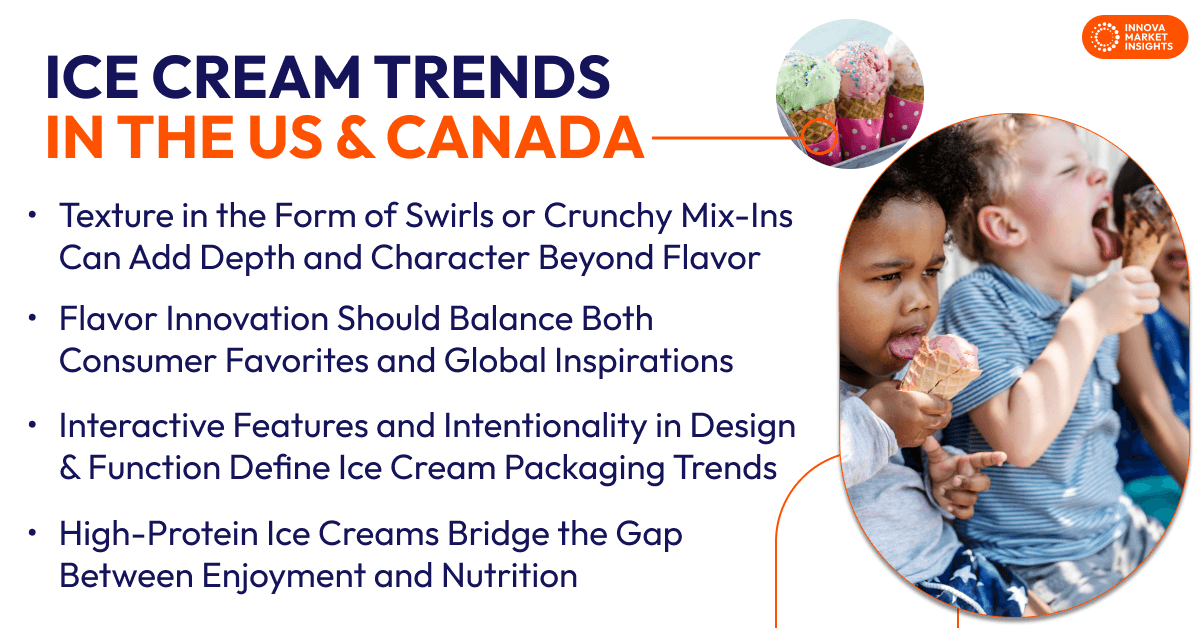
Layered textural inclusions also unlock memorable experiences for consumers. Texture in the form of swirls or crunchy mix-ins can add depth and character to a product beyond flavor alone, and as a result, sensory differentiation can encourage trial and repeat purchases and help brands stand out in a crowded market.
How are Ice Cream Trends Addressing Consumer Health Priorities?
Brands are expanding consumer choice by offering consumers healthier choices with diverse dairy-free, functional, and clean offerings. Nearly 1 in 4 consumers in the US and Canada report that they purchase 100% plant-based products to add variety to their diets. Coconut cream, soy, and oat milk are a few of the alternatives that are already available on the market and address consumer desire for alternative formulations. Manufacturers are also leaning into functional indulgence trends, appealing to consumers looking for weight management and energy support through high-protein ice cream formulations. This bridges the gap between enjoyment and nutrition. Similarly, 35% of consumers in the US and Canadian market look to limit ingredients that are bad for them in order to make a snack healthier. As such, clean-label and reduced sugar formulations also align with evolving wellness priorities.
What Kind of Innovations are Driving Engagement in the US and Canadian Ice Cream Market?
Sensory delivery and occasion-based innovations drive engagement in Canada and within the US ice cream market. That being said, generational preferences play a large role in what resonates with consumers. 32% of Boomers say rich aromas are an important sensory aspect to them in an indulgent food and beverage experience, compared to 24% of younger consumers. In contrast, bold flavors and visuals appeal to younger consumers, and understanding these approaches can help brands broaden consumer reach and cater to diverse needs within a single portfolio. Meaningful consumption is another core driver. Products that are designed for sharing or social gatherings can encourage consumers to incorporate ice cream into their important moments outside of daily treats.
Which Approaches Can Brands Take to Improve Shelf Impact?
Interactive features and intentionality in design and function are defining ice cream packaging trends, boosting shelf impact. Adding interactive elements such as QR-enabled features create digital touchpoints, drive consumer engagement, and strengthen brand-consumer connections in the US ice cream market and Canada. Visual aesthetics can contribute to this as well, with brands balancing minimalist and maximalist designs. Muted tones and clean typography, for example, can reinforce clean, fresh messaging, while vibrant colors and patterns can reinforce limited edition or indulgent appeal. From a functionality perspective, packaging that caters to modern, on-the-go lifestyles also resonates. Resealable packaging, portable single-serve, and easy-grip cups enable easier integration into everyday routines.
Where is Ice Cream Flavor Innovation Heading?
For brands, ice cream flavor innovation will center on the ability to diversify flavors and balance portfolios that feature both consumer favorites and global inspirations. 34% of consumers look for familiar tastes in dessert and ice cream. Classic flavors, such as peanut butter and jelly, can not only appeal to those seeking recognizable tastes but also rekindle nostalgia for these individuals. Familiarity can also encourage trial by reducing risk.
Although consumers continue to reach for staples, globally inspired flavor experiences can broaden their palates, while also adding novelty and authenticity to the category. For instance, Vietnamese coffee, Dubai chocolate, and matcha are a few flavors appearing in launches.
What’s Next for Ice Cream Trends in the US & Canada?
Ice cream innovation lies in the reimagination of formats and what indulgence can look like for consumers. For example, brands are already looking to merge the frozen treat with hot-serving formats like affogato to expand consumption occasions. Beyond its role as a cold dessert, ice cream can therefore become suitable for cozy and experiential dessert moments. Ice cream mixes are another opportunity to create interactive moments and new formats that capture consumer interest. Blending indulgence with functional wellness benefits like gut health is another way to appeal to a wider range of consumers, such as health-conscious individuals or those looking for guilt-free indulgence. Kefir-inspired cultures are one option for additional support.
This article is based on Innova’s Overview In Ice Cream in the US & Canada report. This report is available to purchase or with an Innova Reports subscription. Reach out to learn more.