



May 12, 2026 – A handful of food trends in 2026 are set to define new product development across US and Canadian market. Protein and fiber still lead among in-demand nutrients. Indulgence is taking on new meaning, drawing as much from sensory enjoyment as from health. Plant-based has evolved past the simple imitation of animal products, and mental wellness now ranks among the priorities that natural food and beverage formulations must address. Innova’s “Top F&B Trends 2026 in the US & Canada” report unpacks each of these shifts and maps where brands have room to sharpen innovation strategy.
Where Does Protein Stand In The Top US And Canada Food Trends 2026?
Protein still dominates US and Canadian food trends in 2026, as consumers increasingly prioritize protein for its mental focus, sports performance, weight management, and energy benefits. Across both markets, 54% report actively incorporating more protein into their diets. The result is a steady stream of protein-forward launches targeting new formats and new occasions. Quality has now overtaken quantity as a leading purchase driver, with new product development increasingly introducing combinations of fast and slow-absorbing protein types in a single product.
How Are Gut Health Products Increasingly Positioned And Accepted By Consumers?
In the Canadian and US food market, consumers now view gut health as an entry point to wellness across the body and mind. In response, brands are stretching the benefit story past digestion. In particular, consumers see a strong relationship between the gut, weight, and stress, with the latter being the top mental health aspect related to gut health that consumers are concerned about. Product launches mirror this thinking. Benefit claims have grown broader and more varied. Fiber runs in parallel to this trend, and plant fibers like tapioca are offering new ingredient opportunities for brands.
Why Is The Role Of Indulgence Being Reshaped In The US & Canadian F&B Market?
Indulgence is no longer synonymous with decadence alone. It is becoming a complex, layered experience, as reflected by food trends across categories. US and Canadian consumers now think about indulgence through four pillars, including comfort, mood, sensory enjoyment, and healthy options that support well-being. Both familiar and novel inventions are pushing this innovation forward, and 60% of consumers say they want to explore new things, a higher share than those who reach for familiar options when indulging. Health is also integral in shaping these food trends in 2026, giving brands a clear opening to leverage sugar reduction methods and natural formulations that align with what consumers are looking for.
In What Ways Is The Role Of Beverages Evolving In The Eyes Of US And Canadian Consumers?
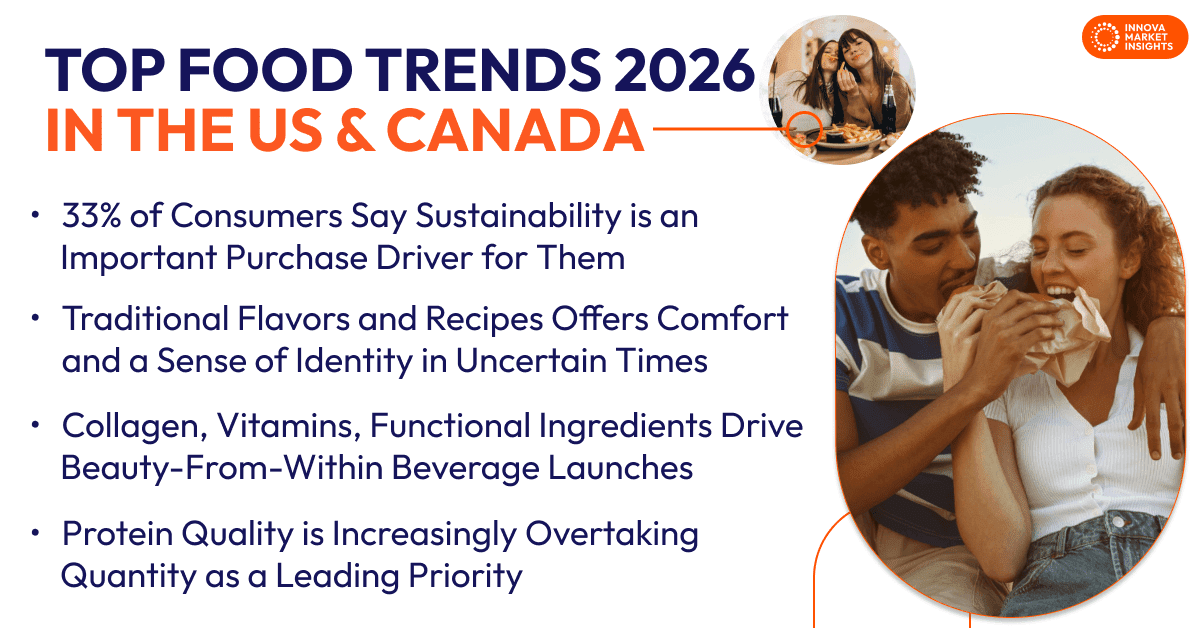
Beverages sit at the front of wellness innovation, with 51% of US and Canadian consumers increasing their intake due to perceptions of healthiness. Health and indulgence have become inseparable here, in line with elements of the “Layers of Delight” trend. Collagen, vitamins, and other functional ingredients now power beauty-from-within launches that target everything from skin to hair support. Innova’s research is also tracking how fortification is moving steadily into liquid formats, with drinks now the preferred route for protein and prebiotic intake in the Canadian and US market.
How Is The Perception Of Plant-Based Shifting?
The plant-based landscape continues to progress, as consumers are embracing plant protein for its added benefits rather than mere alternatives to traditional protein sources. Fiber is the leading health-related selling point. Naturalness will also be a key message moving forward in new product development and food trends, aligning with consumers’ demands. 34% of US and Canadian consumers cite natural or minimally processed status as an important factor when choosing food and beverage for protein. That gives brands a clear opening to grab attention and communicate value.
Pea protein has taken the top spot among alternative protein sources across tracked plant-based and vegan launches. Oats and vegetable proteins follow close behind among the fastest-growing alternative protein sources.
What Does Occasion-Based Innovation Mean In Relation To Consumer Lifestyles?
Occasion-based innovation is spreading into snacks, fresh meals, and single-serve formats that suit consumers’ evolving lifestyles. This is especially relevant in a market where 25% of consumers are single-person households who consume a majority of their meals alone. Snacking shows the same pattern in food and beverage trends. US and Canadian consumers say more than half of their snack occasions are solo.
Food trends in the US and Canada show that convenience will stay central as consumer demand for nutrients is intertwined with the desire for easy consumption moments. Products like instant oatmeal, cup noodles, and protein-fortified coffee mixes speak to that on-the-go reality.
What Is Driving Loyalty And Choice Among Consumers?
Economic pressure is changing food trends in 2026 and how people shop. Across North America, affordability and accessibility now sit at the center of loyalty and choice. 35% of consumers relate their preference for simple, straightforward foods directly to the uncertainty around them. Consumers seek stability, and brands who can address these worries will ultimately come out ahead. Apart from honest, uncomplicated choices, private labels are another growing food trend, with a majority of consumers viewing it as good value for money. Additionally, on-pack promos will be essential to help consumers justify their spending.
How Are Gen Z and Millennials Addressing Mental Well-Being And Stress Concerns?
Mental wellness is a rising priority for consumers, particularly Gen Z and Millennials, and many are turning to natural food and beverage choices for energy, stress relief, and brain health. When seeking comfort, food and beverage trends indicate that North American consumers tend to choose hot drinks, dairy, and dairy alternatives. For something that lifts mood and evokes happiness, they pick chocolate, sugar confectionery, and juice drinks. Botanicals also remain a go-to for consumers looking to improve their mental well-being. Green tea and chamomile are selected time and time again as the go-to ingredients for mental health. Adaptogens are the next wave, fueling a new set of mood-focused launches.
How Is Heritage Powering Consumer Choice?
Food heritage is influencing food and beverage trends through consumer choice, as it offers comfort and a sense of identity in uncertain times. 20% of consumers say that maintaining and practicing traditional recipes is an important value in their diets. Nearly the same share are drawn to exploring different cultures through food. Both motivations highlight a chance for brands to tailor new product development to both interests, with one key nuance. “Traditional” is not defined the same way across all markets. European consumers think of regional and local recipes. North Americans think of childhood favorites. Food trends indicate that consumers are also more inclined to use superfoods that are traditional to their regions to improve their physical health, such as blueberries in the North American market.
What Are Non-Negotiables For Consumers In New Product Development?
Sustainability and responsibility are still tiebreaking food trends. New product development built around these practices will win out. 33% of consumers cite sustainability as an important characteristic when purchasing food and beverage. They will pay a premium for sustainable products when brands can show real support for local communities and the environment. Clear messaging on ingredient sourcing carries equal weight, and transparency ranks among the top concerns for most US and Canadian consumers, fueling food trends in 2026
This article is based on Innova’s Top F&B Trends 2026 in the US & Canada report. This report is available to purchase or with an Innova Reports subscription. Reach out to learn more.