



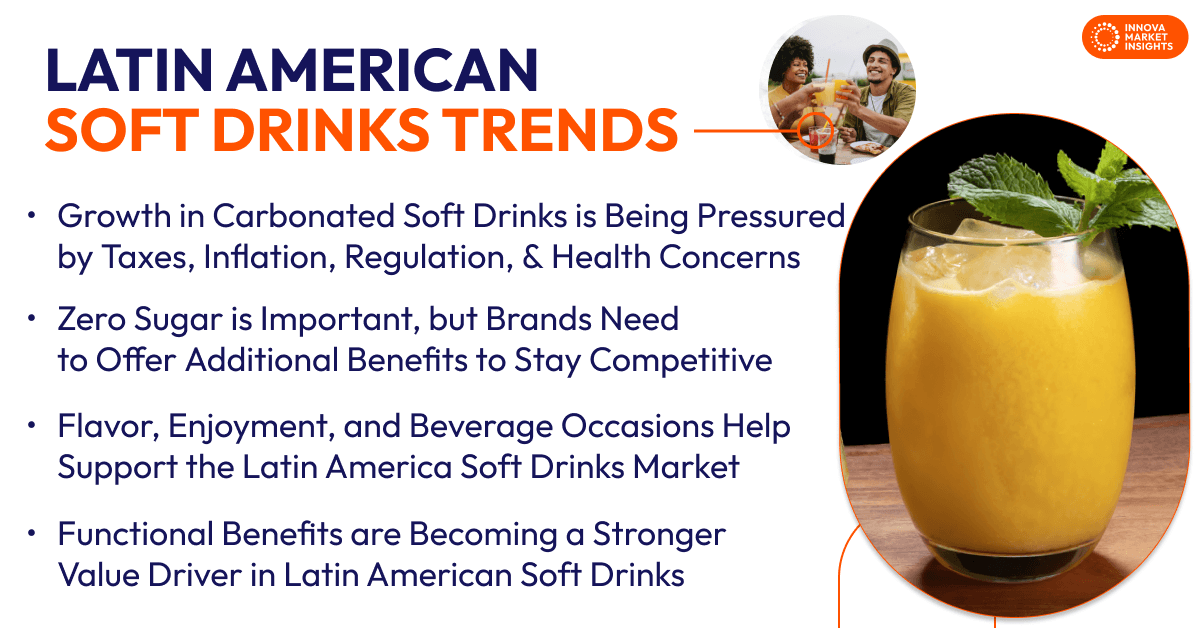
May 14, 2026 – The carbonated drinks subcategory of the soft drinks market in Latin America is slowing. Latin American carbonated drink consumption is decreasing for several reasons, including health, price increases because of taxes, and price increases because of inflation. Still, Latin American consumers continue to include soft drinks in their daily routine. Innova’s “Soft Drinks in Latin America” report delves into these Latin American soft drink trends, uncovering the next opportunity and white space for innovation.
What are Latin American Consumers Interested in and Avoiding Within the Soft Drinks Market?
Innova consumer trends research shows that Latin American consumers are interested in soft drinks with zero sugar, and they also want to avoid artificial sweeteners. Zero sugar is important today but it won’t always be the driver. Brands are innovating around zero sugar now but because the Latin American soft drinks market is so crowded and competitive, soft drinks brands will need to compete on more than just less sweetness.
What is the Driving Force Behind Reformulations in the Latin American Soft Drink Market?
Regulation is one force behind sugar reduction in Latin American soft drinks, and Latin American soft drinks brands are keeping up with the speed of regulations. Because the Latin American soft drinks market launches fewer new products than other regions do, the market has potential for growth by brands that innovate and motivate consumers to enjoy soft drinks at more occasions.
How Can Brands Motivate Soft Drink Consumers to Increase Purchases in the Latin American Market?
Latin American consumers are motivated to purchase soft drinks based on product flavor and consumer enjoyment, as flavors are what drive occasions in the LATAM soft drinks market. Flavors help make soft drinks refreshing and they meet Latin American consumer needs for flavor excitement. Latin American soft drinks consumers are looking for flavors that are local and authentic, familiar, or exotic. Enjoyment involves having carbonated drinks at social opportunities and family meals, especially in South America. Nonetheless, soft drinks still have to meet consumer expectations for health and taste. Also, price and health are important and could take a bite out of soft drinks occasions and soft drinks brand loyalty.
The variety of soft drinks in the Latin American grocery aisles makes it harder for consumers to be brand loyal. It is challenging to get consumers to drink soft drinks at least once daily, if not more often. This is also true for better-for-you soft drinks brands. One approach might be to inspire new habits by linking soft drink consumption to occasions and activities.
Another approach is for brands in the Latin American soft drinks market to balance function and flavor. Function is a solid driver of soft drink innovation and can expand beyond the typical features such as hydration and energy. Flavors and their related ingredients can both create cravings and help consumers overcome them. Ingredients like berries could enhance mood, and antioxidants might help tackle stress, and pineapple and banana could boost feel-good serotonin.
What is the Role of Functionality in Soft Drinks?
Latin American soft drinks with functional properties boost consumer perception of value. Energy drinks are growing solidly, demonstrating that functionality involves more than just hydration. However, bottled water is growing in the soft drinks market, especially in Mexico, because it is safe and affordable.
Which Generation Should LATAM Soft Drink Brands Target in New Product Development?
Younger generations of Latin Americans are interested in soft drinks. Also, because attrition is common as consumers get older, brands in the soft drinks market need to attract new consumers and inspire brand loyalty. These consumers will be looking for affordability and health benefits as well.
What do Consumers Watch out for When Selecting Soft Drinks?
Latin American consumers are aware of demonized ingredients in soft drinks. The beverage aisle includes a lot of products that have demonized and undesirable ingredients. However, consumers in the Latin American soft drinks market are also wary of artificial sweeteners. Furthermore, various countries have nutrition label regulations that attract consumer attention to demonized ingredients.
How can Brands Stand up to Competition?
Diversification in the beverage aisle is hitting carbonated soft drinks the hardest. For example, consumers in the Latin American soft drinks market are being driven by health priorities to move into non-alcoholic beverages. It is easier to make better-for-you health choices in soft drinks than in food, but affordability and price could outweigh health, as demonstrated by growth in bottled waters.
What’s Next in Soft Drinks in Latin America?
Watch for flavor to be a strength for brands and to encourage Latin American consumers to enjoy experimenting with flavors that are familiar and local. Soft drink trends indicate that zero sugar will be expected as the standard, and natural sweeteners will be seen as a product benefit in the LATAM soft drinks market. Functional benefits are likely to expand in carbonated beverages, as well as functional and flavored waters. Expect to see more attention on gut health benefits, including probiotics. Although younger Latin American consumers will be interested in gut health, the aging population will value gut health even more. AI will reshape the carbonated beverage and soft drinks market in Latin America, especially in supply chain management, advertising, communication, flavor innovation, and packaging.
This article is based on Innova’s Soft Drinks in Latin America report. This report is available to purchase or with an Innova Reports subscription. Reach out to learn more.