


May 11, 2026 – In line with Innova’s Top Ten Trends of 2026, the global dairy and dairy alternatives market reflects the rise of functionality, health-consciousness, and innovations that are better aligned with consumer lifestyles. Protein and gut health claims continue to lead wellness-related positionings. Beyond functionality, convenience and occasion-driven formats are driving a new wave of dairy trends. Brands in the global dairy market are positioning dairy products as easily accessible products to integrate into daily routines and existing habits. Innova’s “Top Global Trends 2026 in Dairy and Dairy Alternatives” report examines these trends and other leading drivers in depth, offering brands the insight they need to optimize their innovation strategies and product portfolios.
How Is Protein’s Rising Popularity Influencing Dairy And Dairy Alternative Trends?
In the dairy market, protein momentum is as strong as ever, with milk and yogurt cited as the most purchased products with protein claims. However, beyond quantity, consumers are now seeking high-quality, better-absorbing protein sources. In fact, 31% consider this an important factor when selecting food and beverage products for the nutrient, and protein in general is the main benefit to consuming dairy products, according to half of global consumers.
The opportunity for brands in the dairy market will lie in the ability to leverage protein for its nutritional value, as well as a gateway to broader functional health positionings in dairy. In dairy alternatives in particular, pairing protein with other functional benefits like focus, sport performance, and energy is key. In the GLP-1 era, weight management in both traditional dairy and dairy alternatives is also gaining renewed momentum in innovation, demonstrated by the growth of new dairy launches tracked with protein and weight management claims.
What Is The Relationship Between Gut Health And Dairy In New Product Development?
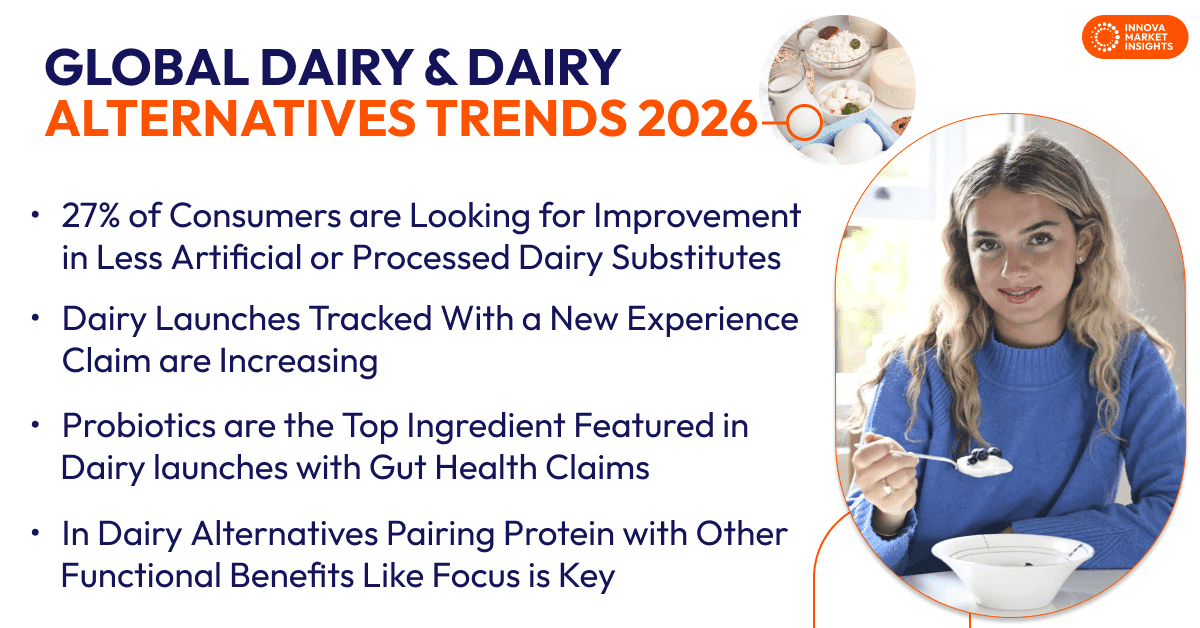
59% of global consumers consider gut health as essential to their overall health, and this trend is clearly reflected in the dairy and dairy alternatives categories. Global dairy trends show that probiotics are the top ingredient featured in dairy launches with gut health claims. Streptococcus thermophilus and lactobacillus acidophilus are among the top bacteria. Fiber and vitamin D also demonstrate a strong presence in launches for both dairy and dairy substitutes. Furthermore, consumers see a strong connection between gut health, weight, and stress, signaling to brands the multifaceted approach new product development should take in respect to both physical and mental well-being.
How Are The Dairy And Beverage Categories Intersecting In Regard To Health?
Functionality is a core driver of beverage consumption in the dairy market. Half of global consumers have increased their beverage intake, due to the perception of healthiness. In fact, a majority consider dairy-based drinks a “healthy snack.” Key health claims in dairy beverages include high source of protein, low fat, no added preservatives, and bone health.
What Is The Core Driver Of Indulgence In Dairy And Dairy Alternatives?
Global dairy trends indicate that in the category, indulgence is all about discovery. 60% of global consumers want to explore new things when they treat themselves. Reflecting this trend, dairy launches tracked with a new experience claim are increasing. Dessert and ice cream lead are one of the leading categories for flavor experimentation, and a majority of consumers are also looking for interesting texture combinations in an indulgent food and drink experience.
Health-led cues are also influencing the dairy and dairy alternatives category, as they add a sense of permissibility. Brands should prioritize low in sugar and natural ingredients to address these perceptions and help consumers feel that an indulgent food or beverage option is healthy for them.
What Are Consumers Looking For Dairy Products To Deliver In Occasion-Based Innovation?
The dairy category is making intentional moves to adapt to moments in the home, ranging from personal indulgence moments to shareable occasions. Innova’s consumer trends research indicates that 34% of consumers eat dairy offerings, desserts, and ice cream at home. While nearly one fourth of consumers prefer shareable options to enjoy with friends and family, a similar number of global consumers in the dairy market also prefer solo consumption moments for dairy, underscoring how occasion can play a key role in product development. Snacking is also emerging as a key occasion for dairy, with diverse snacking needs also driving innovation to address enjoyment, function, or sharing.
Convenience-led formats are also at play. These are aimed at promoting dairy products that fit into everyday routines and specific moments outside of traditional meals. On-the-go yogurts, cheese balls, and ice cream bites are a few examples of this trend in the dairy market.
How Is The Role Of Plant-Based Defined In The Dairy Alternatives Market?
When it comes to the dairy alternatives market, minimally processed and naturalness are key messages driving plant-based dairy options. This can be seen by the fact that 27% of consumers are looking for improvement in less artificial or processed dairy substitutes. Short ingredient lists are another priority.
Plant-based dairy messaging is also moving away from alternatives to ingredient-driven products. Oats, nuts, and legumes are now setting the standard for consumers, with oat milk leading and pistachio milk growing in launches.
What Can Brands Do To Make Global Consumers Feel Their Purchases Are Justified?
Sustainability remains a decisive factor for global consumers, and it wins when it feels tangible and transparent to them. They are also willing to pay a higher premium for products that can demonstrate this commitment, especially those that support local communities or farmers. In the dairy alternative market, this is reflected in the growth of human-related claims. New product development is in parallel with these trends. For instance, environmental protection and improved taste are characteristics highlighted in launches that address sustainability concerns. 38% of global consumers also agree that dairy substitutes are more sustainable than regular dairy, indicating an opportunity for both dairy and dairy alternative brands to adapt messaging that further promotes existing initiatives or addresses areas where transparency can be improved.
This article is based on Innova’s Top Global Trends 2026 in Dairy & Dairy Alternatives report. This report is available to purchase or with an Innova Reports subscription. Reach out to learn more.