



May 20, 2026 – The ready meals market in the US experienced significant growth during the pandemic, but since then, a variety of factors, such as financial pressures, are spurring changes in consumption. Affordability is key to consumers and brands alike in the market, but time savings and better-for-you options are equally important to capturing consumer attention and driving purchasing behavior. Flavor exploration, fusion cuisines, and simplicity are other trends that can inspire innovation and new product development. Innova’s “Ready Meals in the US” report examines these trends and more, placing a spotlight on where the opportunity lies for brands.
Where Does The US Ready Meals Market Stand Today?
In the US, ready meal consumption has increased in recent years, driven by middle- and high-income households. 4 in 10 consumers say they ate ready meals in the past year, yet ready meals trends show financial factors are increasingly impacting both the ability to afford ready meals and the role they play in the lives of consumers in the US. Innova’s consumer research indicates that consumers are overwhelmingly prioritizing natural ingredients when selecting a ready meal. However, over the last five years, brands focused less on these claims, highlighting both an issue and opportunity in the market.
Which Consumer Segment Will Be Important To Target Moving Forward?
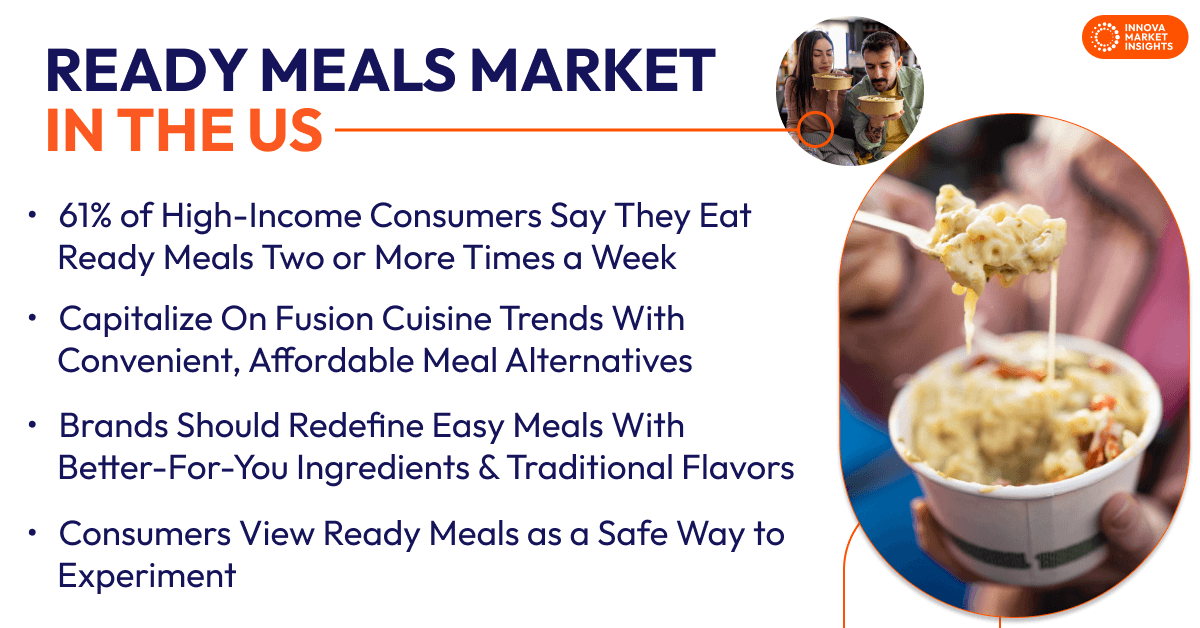
The US ready meals market demonstrates strong growth potential for high-income consumers. Although 61% of high-income consumers say they eat ready meals two or more times a week, this group is less likely to engage with the category overall. As a result, US ready meals trends suggest that brands should consider the habits and preferences of high-income consumers to market themselves as a routine luxury that they should choose to indulge in.
What Are The Main Approaches Ready Meal Brands Can Take To Increase Value For Consumers?
Despite the fact that high-income consumers are a segment worth focusing on for growth, brands should also look to emphasize both time savings and health benefits to effectively target all consumers. This is particularly relevant, as consumers are facing an unstable economic landscape, often reducing their budgets, and this is challenging ready meal brands to balance affordability with standing out in the crowd. Thus, increasing and emphasizing time savings will be crucial, especially for lower income consumers who value functional affordability and see ready meals as cost-effective. That being said, high-income consumers view ready meals as a regular treat, highlighting how reframing ready meals as a high-value indulgence will be important.
Beyond convenience, health is another core driver of the US ready meals market. Naturalness and freshness are rising in importance. 40% of middle income and 45% of high-income consumers value freshness as important product attributes when purchasing ready meals. Health is also a priority, challenging brands to create the freshest products while avoiding the ingredients consumers deem unhealthy.
Which Trend Is Gaining Momentum In US Food Culture That Ready Meal Brands Can Tap
The trend of fusing international cuisines together has gained momentum in US food culture. This is reflected by the increasing number of restaurants that are dedicated to blending diverse flavors, and ready meal brands in the US can capitalize on this demand, developing their own innovative flavors that serve as a convenient and affordable alternative to restaurant meals. Furthermore, consumers often view ready meals as a safe way to experiment, empowering consumers to discover new flavors. Chicken and mac and cheese are also favorites in the category, so brands should strive for exciting twists to these staples.
What Opportunities Can Ready Meal Brands Take Away And Apply From US Consumer Trends?
Aligning with Innova’s Consumer Trends of 2026, consumers in the US are craving both a simplified, more balanced lifestyle and offerings that optimize their health for the future. Convenience is innate to the ready meals market in the US, but brands should be looking to push the boundaries of an easy meal with better-for-you ingredients and traditional flavors. This not only redefines to consumers what ready meals can mean for consumers but also coincides with what consumers are prioritizing in their everyday lives. Brands like Rootberry and Natural Heaven understand that consumers don’t want to sacrifice when it comes to taste or health, creating health-forward ready meals rich with flavor.
What’s Next For Ready Meal Trends In The US?
Brands looking to stay ahead can turn to a few approaches to address evolving consumer trends and new product development in ready meals. Moving forward, limiting the use of artificial ingredients will be crucial to delivering better-for-you options to health-oriented consumers. Unique cuisine and flavor fusions will also remain a key strategy to entice and engage consumers, while keeping indulgence in mind will be important to position ready meals as an easy way to add luxury to their daily lives.
This article is based on Innova’s Ready Meals in the US report. This report is available to purchase or with an Innova Reports subscription. Reach out to find out more