



July 24, 2026 – The European milk market includes unflavored milk products such as liquid dairy milk, powdered dairy milk, unflavored milk drinks, and unflavored milks that are mixed with grains as an inclusion. Flavored milk products include flavored liquid dairy milk, flavored powdered dairy milk, and flavored milk drinks without and with added grain. Dairy alternatives are marketed in the same varieties as dairy milk.
Milk is a Staple in Europe
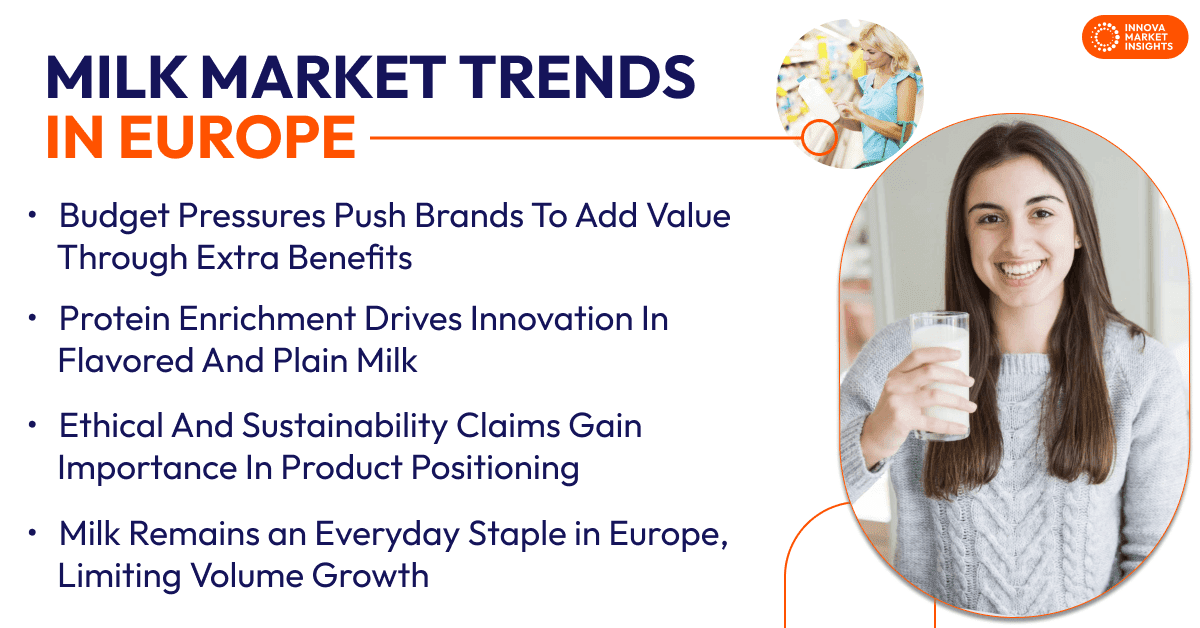
In Europe, milk trends show that consumers consider milk to be an everyday staple. It is often used by European consumers at breakfast and in hot drinks, and use is driven by older consumers. That is why the potential is limited for milk volume to grow. Another challenge to the European milk market is cost fluctuations in production that contribute to volatile prices at the retail level. This pushes milk suppliers in Europe to add value and more for the money wherever they can. In a mature marketplace with cost challenges and stagnant volume, adding value is a way to maintain growth in milk value.
European participants in Innova’s consumer trends research says that they value both the taste and the health benefits of unflavored milk.
Protein Drives Milk Innovation
The addition of protein is a big and significant trend for the milk market in Europe. Protein is a prominent addition especially in flavored milk drinks, but Innova is tracking the addition of protein to plain milk also. Milks that are high in protein can be marketed in different ways, including to those involved in fitness, active consumers, and families, since extra protein gets the attention of a growing number of consumers. Companies in the European milk market are looking for additional ways to use protein additions to add value to the marketplace. One option is to add protein to European milk products that also are low in fat and have no added sugar.
Flavored Milks are Gaining
Innova Market Insights is tracking growth and innovation around flavored milks in the European milk market. Milk flavors are becoming more indulgent and getting flavor inspiration from categories such as confectionery, sweet bakery, and dessert. Flavors to watch include pistachio, vanilla, and salted caramel. Limited edition flavors are another attention-getting strategy by the industry leaders to keep brands fresh and add indulgence to milk These features are helping flavored milk to gain market share over unflavored milk products in Europe.
Compared to unflavored milk, European consumers choose flavored milk less often. European consumers get pleasure from the flavor in flavored milk. They drink flavored milk as a treat for any time of day, including snacking, and for all types of occasions. Compared to unflavored milk, flavored milk is more popular among younger generations and they are the ones driving an increase in volume growth.
Ethical Considerations are Important in the European Milk Market
In the European milk market, claims about ethical and sustainable production are becoming more prominent, especially regarding fair trade ingredients and animal welfare.
Watch Out for These Developments in the European Milk Market
Pressures on cost of living because of various international events will add to cost concerns in the European milk market. This will enhance the importance of added value as a milk feature. Because milk is a staple item in Europe, European consumers are trapped in terms of cost. But they want more for their money if they are paying a higher price. Brands can add value by offering longer shelf life, claims regarding actions toward animal welfare, added flavors, or extra nutrients.
European consumers are extremely aware of the health of the planet. European milk suppliers are trying to respond to this with more ethical claims o their products. In fact, penetration of ethical claims on European milk products has risen markedly over a recent five-year period. European consumer concerns about animal welfare may be driving them to move from dairy milk to plant-based milk alternatives. Claims regarding to ethics around humans include certified sustainable cocoa and chocolate ingredients as the industry standard.
European consumers increasingly are looking for dairy milk that is lactose-free in response to their self-diagnosed lactose intolerance. The European milk and milk drinks market has responded with growth in penetration of lactose-free product options as a way to add value for European milk consumers.
What’s Next for the European Milk Market Trends?
Protein, and also product with additional benefits, will be a key driver of the European milk market. Suppliers are expected to add functional ingredients or create new formats to accompany extra protein in dairy milk and dairy alternative milks. Milk trends reveal that indulgent and novel flavors that evoke indulgence are expected in flavored milks. Milks will take their flavor inspiration from categories such as ice cream, sweet bakery, and desserts in order to deliver exciting and novel tastes.
Milks can experiment with textures and multilayered sensory features to capture the attention of European consumers who are looking for different textures in a single product. These can include the traditional thick, creamy, and smooth textures in milk drinks, as well as inclusions and even thicker mouthfeels. European dairy brands will be emphasizing their ethical practices around animal welfare and the human and sustainable treatment of dairy cows. As they track social media trends, European milk brands will gain inspiration for new flavors and new product concepts. Dubai chocolate is a key example.
This article is based on Innova’s Milk & Milk Drinks in Europe report. This report is available to purchase or with an Innova Reports subscription. Reach out to learn more.