



October 12, 2026 – Sugar remains the ingredient European consumers most want to cut from their diets, yet what they expect from sugar reduction is also changing. Younger consumers are interested in adding nutrition, more than simple subtraction, and consumers still expect sweetness from indulgent products and value for money overall. Government action on sugar in several markets also continues to put pressure on manufacturers. Innova’s Sugar Reduction in Europe report explores how brands can modernize the sugar reduction market to meet these shifting demands.
Why is Sugar Still Europe’s Top Target?
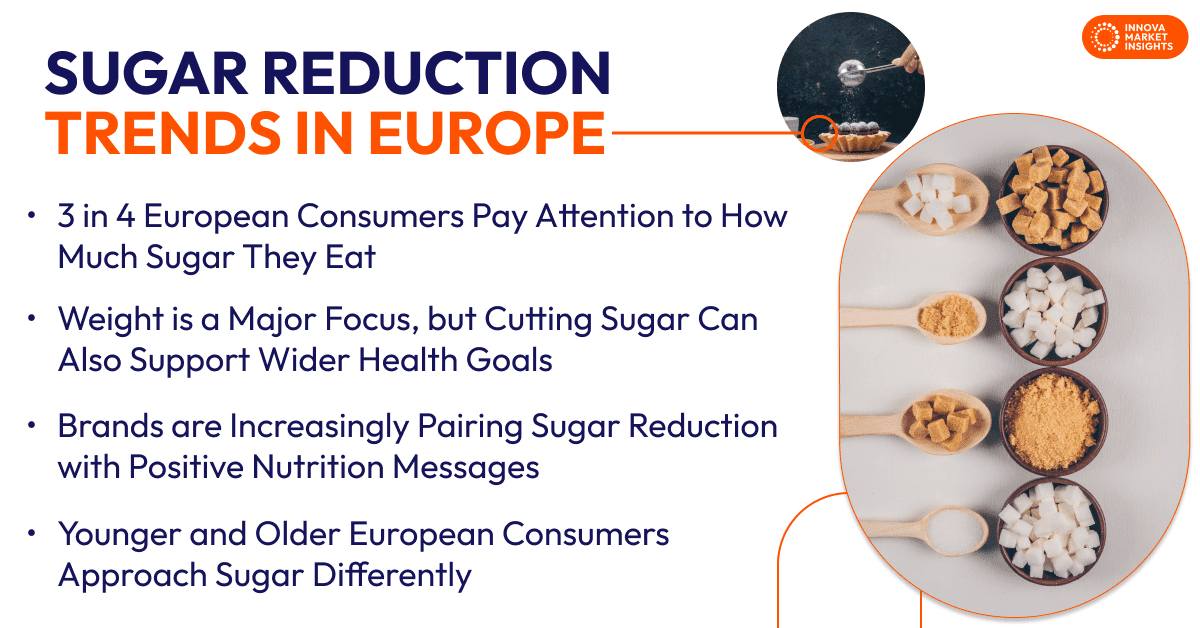
When looking to remove negatives from their diet to follow healthier eating habits, sugar is the top target for European consumers, ahead of processed foods, fat, and salt. Innova’s research shows that three in four European consumers pay attention to how much sugar they eat, and a majority of these are actively reducing it. Weight is a major focus, but cutting this ingredient can also support wider health goals, such as balanced energy and gut health. Despite the rise of GLP-1 medications, most European consumers still prefer to improve their health through diet and lifestyle, which keeps everyday food and beverages at the center of sugar reduction trends.
How is Product Development Responding to Sugar Reduction?
Brands have responded to this demand with more sugar-reduced launches across food and beverages. According to Innova’s research, over 10% of all new food and beverage products in Europe now carry a low, no, or reduced-sugar claim, and these launches are growing faster than the wider market. No added sugar remains the most common claim, reflecting a greater emphasis on natural recipes. Small reductions, on the other hand, are becoming less common, signaling a shift toward clearer cuts or complete removal. Sports nutrition and soft drinks continue to lead, but snacks, ready meals, and desserts and ice cream are also gaining ground, showing how sugar reduction trends in Europe now reach across the food and beverage spectrum.
Why are Younger Consumers Looking Beyond Cutting Sugar?
Younger and older European consumers approach sugar differently. Innova’s data on sugar reduction trends in Europe shows that while older consumers remain more focused on cutting unwanted ingredients, 34% of Gen Z consumers say their main approach to healthy eating is choosing products that enhance their nutrition, compared to other approaches like limiting ingredients that are bad for them. Among Gen Z, high-protein diets are also more popular than low-sugar diets. This means reduction alone may not be enough to engage younger consumers, giving brands the opportunity to position it as part of a more positive nutrition story.
How are Brands Putting a Positive Spin on Sugar Reduction?
Brands are increasingly pairing sugar reduction with positive nutrition messages. High-protein claims are the most common pairing, appearing on nearly 3 in 10 new products with sugar-reduction claims. Fiber is another natural partner, as many prebiotic fibers such as chicory root and inulin are sweet to the taste, allowing brands to cut sugar while adding fiber. Hydration, collagen, and weight management are also among the fastest-growing pairings, underscoring how reduction is becoming part of a broader functional story.
Can Sugar Reduction Deliver on Taste and Value?
Sweetness remains the top factor in what consumers want from indulgent food and drink, meaning sugar reduction trends cannot come at the cost of taste. Value also matters, with more than 2 in 3 European consumers saying they often check prices, even on small items. Lower-sugar alternatives will need to remain affordable, making cost-effective replacements a challenge for suppliers. In response, many manufacturers are offering complete sugar-reduction solutions that combine texturizers with a mix of sweeteners. Natural alternatives also have an advantage, as sugar itself benefits from a natural image.
What’s Next for Sugar Reduction Trends in Europe?
Government pressure is set to continue across Europe, so recipe reformulation will remain a priority. The bigger opportunity, however, lies in adding a positive spin to the sugar reduction market, whether through added nutrients like protein and fiber or more positive messaging that resonates with younger consumers. Sweet prebiotic fibers are expected to move beyond traditional grain-based foods into a wider range of products. Advances in sweetener technology and new ingredient blends will also be essential to delivering lower-sugar recipes without compromising taste. Seasonal and limited-edition launches are gaining share as well, giving brands another way to keep sugar-reduced ranges fresh.
This article is based on Innova’s Sugar Reduction in Europe report. This report is available to purchase or with an Innova Reports subscription. Reach out to learn more.