



July 20, 2026 – Looking at consumer approaches to healthy eating requires consideration of consumer attitudes regarding health and the pathways to maintain and improve health. US and Canadian consumers are highly aware of their health, health challenges and strategies for living a healthy life today and into the future. Diet is an essential element, along with physical activity, sleep, and stress reduction. Overall, US and Canadian consumers embrace the basics: whole foods, plenty of water, fruits and vegetables, protein, and fiber. Dietary guidelines and innovations such as GLP-1 drugs are shaping healthy eating trends even further, with emphasis on real foods, less processing, and nutrient density. Innova Market Insights looks at these healthy eating trends, discussing drivers and opportunities.
How Do Consumers in the US and Canada View Healthy Eating?
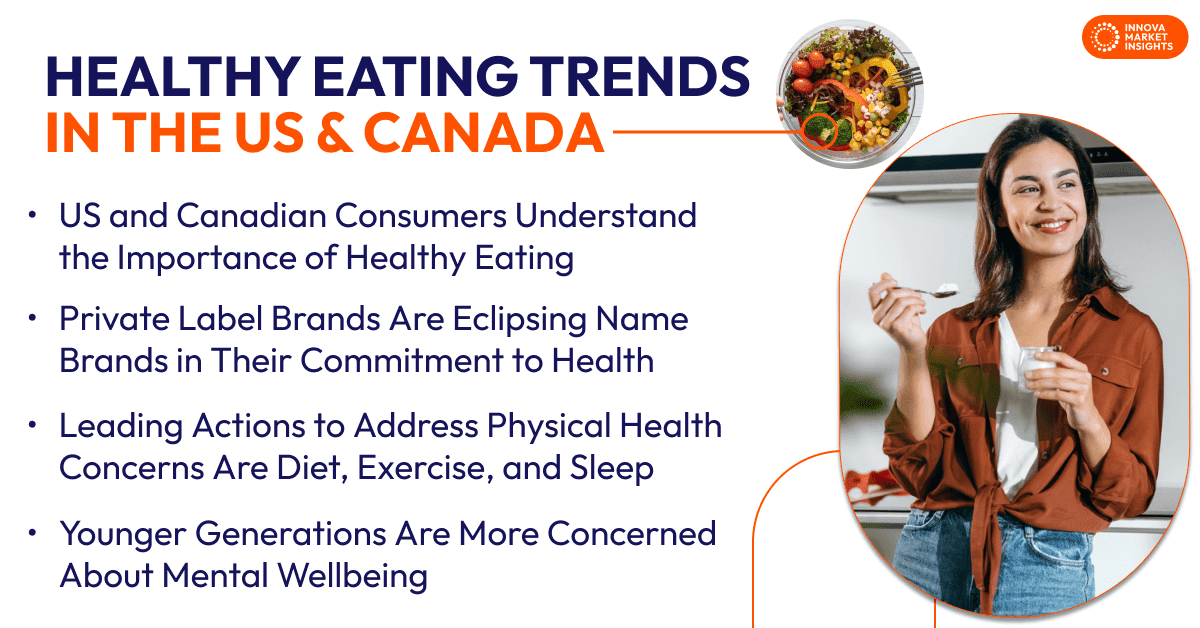
There’s no denying that US and Canadian consumers understand the importance of healthy eating. In many cases, they even prefer it to medication for improving health. In turn, they report taking action to improve their overall wellbeing when possible. Such actions include changing their diet, exercise routines, and sleeping habits. When choosing foods, US and Canadian consumers consider both positive actions, more water, fruits and vegetables and cooking at home, and actions to restrict aspects like sugar, salt, and fat. Here, brands have an opportunity to offer convenient, cost-effective and tasty meal solutions to consumers that simplify healthy eating. Keep in mind that prices, ingredient lists, flavor, and functionality matter. Simplicity can work for these consumers who stick to the basics of drinking water, seeking protein and fiber, and looking for less sugar.
What Can Brands Do to Strengthen Their Healthy Eating Positioning?
It is important for brands to stay on top of marketplace developments while providing sound, research-based information about health and wellness rather than simply embracing trends. Brands can strengthen their positioning by bundling protein, fiber, sugar reduction, and other nutrient content claims to make shopping and healthy eating more efficient for consumers. Private label brands are eclipsing name brands in their commitment to health. For example, Walmart’s Bettergood line is a premium private label with key health features in some products.
What Health Concerns Do US and Canadian Consumers Have?
US and Canadian consumers want to feel healthier overall. They also strive to manage both short-term and long-term health concerns. They express concerns about specific health issues, weight, stress, anxiety, and sleep. Today’s world is filled with uncertainty, so it’s no surprise that consumer worry can lead to health concerns that can be exacerbated by stress. Food and diet should relieve stress, not intensify it.
Weight management, always a priority, takes on new importance in this era of GLP-1 drugs. Younger generations are more concerned about mental wellbeing. Millennials and Gen X are most likely to act toward mental wellbeing. These consumers are handling multiple priorities, from jobs and careers to managing family and finances, all of which require good mental health. It remains essential for brands to use online channels to prove the efficacy of their ingredients and products in ways that are relevant to younger generations.
How Are Americans and Canadians Dealing with Health Concerns?
Diet, exercise, and sleep are leading actions to address physical health concerns for Americans and Canadians. Protein dominates and consumers regularly consume animal protein. Fruit and vegetables are the go-to-fiber, with other sources having potential for expansion, such as legumes and grains. One brand strategy is to help consumers connect the dots between healthy food choices, overall diet, physical activity and health while offering products that are tasty, budget-friendly, and nutritious. Sports nutrition products can reach casual and more serious sports enthusiasts.
What Are Barriers to Healthy Eating?
2 in 5 consumers in the US & Canada say that eating healthily is difficult. Among those who find it difficult to eat healthier, cost is, unsurprisingly, the top reason given, followed by the amount of effort needed to cook healthy food. A winning product positioning could combine competitive pricing, convenience and, of course, health.
How Do Content Claims Influence Healthy Eating Decisions?
Nutrient content claims and front-pack language can provide consumers with shopping shortcuts to identify foods and beverages that align with nutrition and healthy eating priorities. Consumers look for positive nutrients such as protein and fiber and try to limit negative nutrients, so claims regarding nutrient and ingredient content could capture consumer attention. Simpli’sGreen Lentils focuses on simple, single, whole ingredients while highlighting protein and fiber content. 28% of consumers take health goals into account when planning a healthy meal, but budget and taste still rank above, highlighting the need for a combined approach to appeal to consumers looking to eat healthier.
How Do New US Dietary Guidelines Affect Healthy Eating Trends?
The latest edition of the Dietary Guidelines for Americans was released in January 2026. Among the most impactful changes are the doubling of protein recommendations, expansion of recommended fat sources, and encouragement to avoid foods that are highly processed. While US consumers are aware of dietary guidelines, it is unclear whether the changes will change eating behavior. Many of the messages: animal protein, fruits and vegetables, hydration, reducing sugar, no artificial ingredients, already align with the healthy eating priorities of US consumers. However, healthy eating is more expensive.
Canada’s Food Guide closely resembles the MyPlate graphic previously associated with dietary guidance in the US. It recommends plenty of vegetables and fruits, whole grains and protein foods, including those from plants.
What’s Next in Healthy Eating Trends in the US & Canada?
Social media will continue to play a key role in influencing healthy eating trends. This is especially true for younger generations like Millennials and Gen Z. As well as shifting consumer behavior, regulations to limit unhealthy food and nutrition standards will have an impact on different food and beverage categories as they adapt to them. Particularly, tighter requirements around scientific proof of efficacy will set higher standards for labeling, advertising, and promotion.
As budgets tighten for US and Canadian consumers, we can expect an increase in private label purchases, even surpassing name brands for nutrition content and positioning. Value for money will also become more important, driving brands to bundle benefits in singular products, like fiber and protein, and simplifying the process for consumers. These consumers will be looking for nutrient-dense, natural food options that emphasize taste, affordability, and minimal processing, especially as taste buds shift away from highly processed foods as a result of GLP-1 medication. These shifts will likely lead to healthy eating and healthy lifestyles becoming cultural norms in the US and Canada.
This article is based on Innova’s Consumer Approaches to Healthy Eating in the US & Canada report. This report is available to purchase or with an Innova Reports subscription. Reach out to learn more.