


June 26, 2026 – Innova Market Insights highlights key trends shaping the European meat substitutes category. While retail value has experienced solid growth in recent years, Germany and the UK remain the largest individual markets, though they are not the fastest-growing. Many consumers interested in plant-based meat are concerned about over-processing and artificial ingredients, which serve as barriers to purchase. As a result, brands are turning to more natural formulations and a variety of whole food ingredients to improve nutritional appeal. In line with this, health claims, particularly those related to protein and, to some extent, fiber, have become the primary messaging focus.
What is the European Intake of Meat Alternatives?
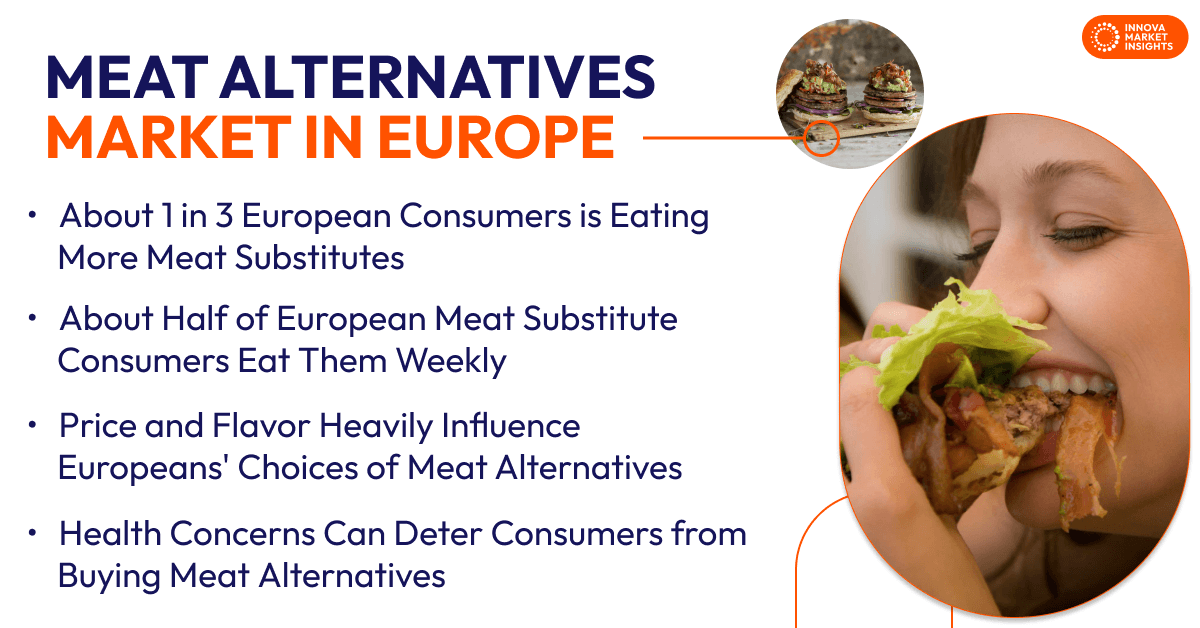
About 1 in 3 Europeans say they are eating more meat substitutes. Most consumers prefer to eat these products at home rather than in restaurants or other food outlets. They look for clean and natural labels, but the taste is still very important. Europeans have different views on whether these products should imitate animal meat or focus on their plant-based ingredients. Around half of European meat substitute consumers enjoy them at least once a week. Regular consumption is more common among consumers in Germany and the UK. In contrast, over half of French and Spanish consumers say they eat them a few times a month or less.
Why Are Europeans Consuming Meat Alternatives?
For Europeans, personal moral reasons were the top reason given by increasers for increasing their consumption. So, sustainable innovation should remain a top focus in NPD. For example, Planted’s smoked and pasteurized steak made from vegetable proteins has the claims of 97% less CO2 and 81% less water than animal beef. Planted is also a certified B Corporation. However, the availability of healthier options ranked closely behind, so targeting nutritional appeal and helping consumers to balance health with convenience would be a good strategy for NPD development.
What Influences Europeans When Buying Meat Alternatives?
Price and flavor are by far the most influential for Europeans when buying vegan meat. However, there are generational differences. For example, Boomers are less price sensitive, and Millennials and Boomers put an increased importance on flavor. Health is also more important to Boomers than it is to Gen Z.
What’s the Market Growth of Meat Alternatives in Europe?
Retail value and volume sales are showing solid growth. Germany is the clear leader in value terms, representing a 31% share, with the UK some way behind at 16%. However, the fastest growth is coming from Finland, and the Southern European countries of Portugal and Italy are also performing well.
Major Players and Retailer Own Brands Lead Innovation
Major multinationals like Nestlé, Otsuka, Monde Nissin, and JBS lead in meat substitutes innovation, with specialty firms focusing on organic or protein-rich products. Retailer brands also play a big role with diverse price points and convenience options. Nestlé, especially its Garden Gourmet brand, is a top innovator in Europe, though it exited the UK market in 2023. JBS expanded via its Vivera brand and recent acquisition of The Vegetarian Butcher from Unilever, strengthening its European presence. Vivera focuses on flavor innovation and convenience, such as Quick Marinading Firm Tofu. Retailer brands represent a notable level of NPD activity in their domestic markets, but also where they operate across Europe, as demonstrated by the shares of launches for some of the major retailers such as Ahold Delhaize, Aldi, DM Drogerie Markt, and Rewe.
Plant-Based and Added Health Claims Were Notable in NPD
NPD activity declined sharply in 2025 compared to the previous year. However, certain areas have experienced a notable increase in penetration. Plant-based claims have gained popularity, possibly reflecting a shift in brand messaging and a growing market focus on natural, whole food ingredients. Claims related to protein and fiber are also attracting attention, with 2 out of 5 European consumers seeking added nutrition, such as protein and fiber, when purchasing meat alternatives. Nonetheless, regardless of how healthy the NPD is, it must taste good to appeal to consumers and encourage repeat purchases.
How is Meat Alternatives NPD in Europe Responding to Demand for Naturalness?
Health remains a concern and can deter consumers from purchasing plant-based protein. Consequently, natural claims are becoming more prominent in European meat substitutes. As consumers seek healthier options and manufacturers incorporate less processed, whole foods, brands are likely to consider not only their target audience but also the positioning of their products. In 2025, 4% of all new meat substitutes in Europe featured natural claims. For example, UK-based meat-free brand This recently launched chickpea tofu with proteins and natural ingredients like seeds and superfoods.
Where Do Europeans Eat Meat Substitutes?
Most consumers prepare meat substitutes at home, while half of European consumers also enjoy eating them at restaurants. Innovations in product presentation, flavor, and texture within the out-of-home industry can influence how retail brands develop their offerings. With approximately two-thirds of consumers cooking and using these products at home, brands have opportunities to create convenient meal solutions. They can also consider additional factors such as health benefits, value for money, and product variety to better meet consumer needs.
How Can Brands Respond to EU Changes in Meat Substitute Terminology?
In early March 2026, the EU Council voted to ban the use of 31 terms in the names of plant-based foods. The banned terms range from animal-related names such as chicken, beef, and pork to specific cuts like breast, thigh, and drumstick. However, more generic descriptors like burgers and nuggets remain permitted. The ban also applies to all marketing and advertising. Presently, many innovators use animal or cut-related terms in their branding or product descriptions. This could lead to products being relabeled with new terminology or brands shifting away from mimicking meat and instead offering more standalone products.
What’s Next for Meat Alternatives in Europe?
We expect a rise in NPD activity as brands adapt to new EU regulations regarding terminology and labeling for meat-free. Additionally, brands will repackage and reformulate products to improve their premium appeal, especially targeting restaurant-quality offerings. With household costs and meat prices on the rise, brands have an opportunity to add value and improve the affordability of meat alternatives, removing purchasing barriers. As consumer demand in Europe grows for clean label and natural ingredients in meat alternatives, brands may incorporate more whole foods to shift perceptions that these products are overly processed. Furthermore, there will be an increase in functional claims for meat alternatives, notably those highlighting protein and fiber positioning, as well as claims related to added iron. Efforts to attract flexitarian consumers in Europe will increase, alongside continued innovation in hybrid meat products.
This article is based on Innova’s Meat Alternatives in Europe report. This report is available to purchase or with an Innova Reports subscription. Reach out to learn more.