


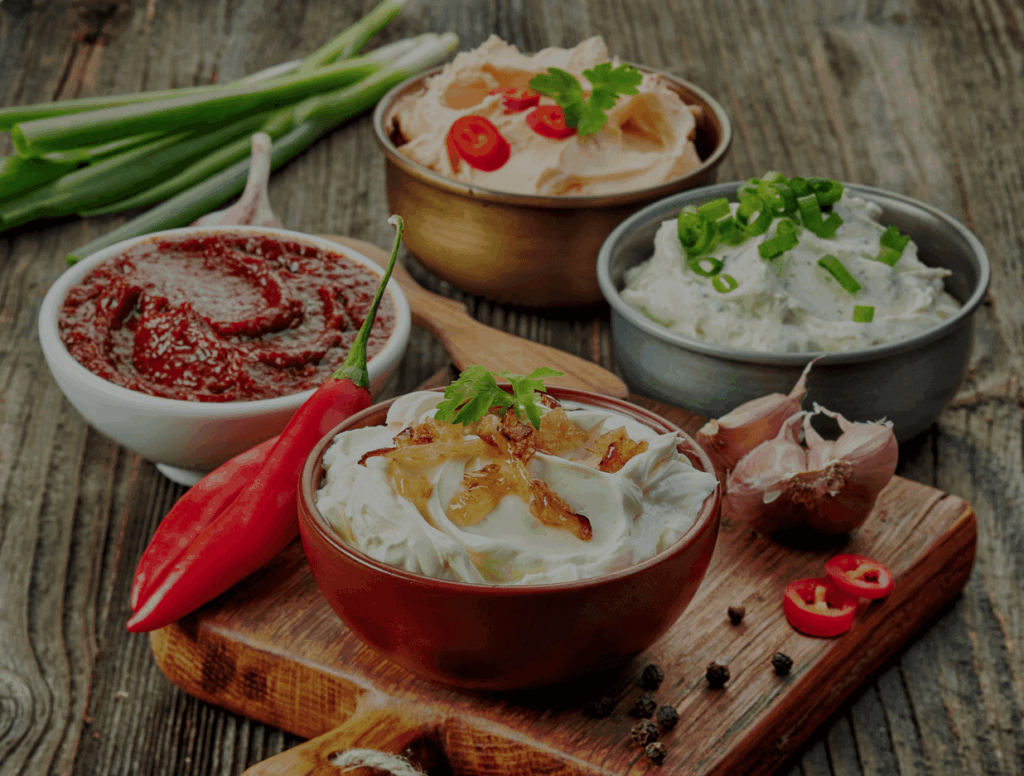
June 17, 2026 – Looking at savory spreads and dips market trends in the US requires consideration of the sources of growth, what forces are driving growth of savory spreads and dips in the US, and generational, clean label, and protein strategies for winning share in the market. This includes consumer motivations, brand innovations, and future strategies.
Growth Trends for the US Savory Spreads and Dips Market
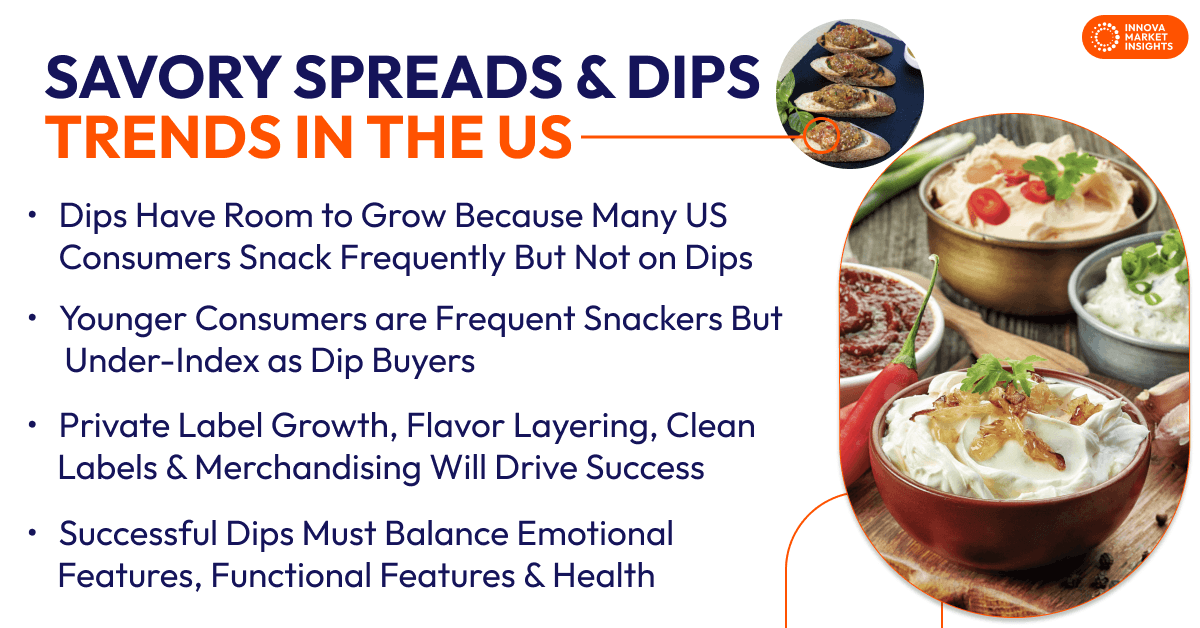
The savory spreads and dips market in the US is at a crossroads. More US consumers are eating more savory spreads and dips than cutting back. However, nearly three-quarters of savory spreads and dips consumers eat then no more than once a week. Since dips are a part of snacking, it seems that dips should grow at the same rate as snacks, but they don’t. US consumer trends research shows that a majority of US consumers eat snack at least twice a day. That is why there’s a big opportunity for dip usage to grow.
Snack Opportunities for Dips
One way to increase the opportunity to grow dips is to break their association with chips. This opens the door for dips for healthy occasions and for indulgences. Some potential pairings for dips include cheese, vegetables, wholegrain flatbreads and chips, and pretzels. Another idea is to use dips as sandwich spreads.
Salty snacks could be more tightly linked to dips. Nearly 3 in 5 US consumers buy salty snacks but the proportion is much lower for dips. A key feature of snacking in the US is that consumers tend to snack by themselves. Brands have an opportunity to encourage solo snackers to include dips in their snack. Among US consumers, Gen Z and Millennials are the most frequent snackers but they are not big dip consumers. In contrast, older consumers are more apt to buy dips. Savory spreads and dips brands could showcase nutrition and flavor to help blur the lines between snacks and meals for younger US consumers.
Snacks are Emotional and Functional
The landscape for snacking is highly polarized. About one-third of US consumers say they are snacking more and snack to support emotional needs like energy, relaxation, and convenience for on-the-go. A smaller but notable percentage say in consumer trends research that they are cutting back on snacking because of health and use of GLP-1 medication. That means that brands in the US savory spread and dip market need to appeal to the functional side of snacking and to the emotional side of snacking.
US Trends Toward Snackification
Snackification is another trend with implications for the US savory spreads and dips market. “Girl dinners” are a way for US dips and savory snacks brands to innovate and grow. US consumers report dinners like raw vegetables or crackers plus hummus for dinner and admit that their snacking is up because they are replacing meals with snacks. The biggest growth potential is for dips, which account for more than 4 out of 5 launches of savory spreads and dips. Savory spreads and sandwich fillers such as tuna salad, chicken salad, spreadable meat paste, bruschetta topping, pesto spread, and olive tapenade have a higher compound annual growth rate.
Ways for dips to grow in this space include limited editions, diversifying use into cooking sauces, tie-ins with holidays that call for chips and dips, and health-enhancing ingredients that provide protein and fiber.
Private Label Emerges in Dips and Savory Spreads
One-third of US launches of dips and savory spreads are private label, with Aldi and Trader Joe’s as leaders in innovation that are showing strong growth.
Pump Up the Nutrition
Brands in savory spreads market can tout the nutrition benefits of their dips and savory spreads. One ready audience is users of GLP-1 weight loss medications. US consumers on these drugs are snacking less often and also moving toward more nutritious snacks with more protein and fiber. Hummus is a good fit for health and nutrition, while dips like guacamole and salsa may be able to be marketed as healthy, natural, and less processed.
Additional Marketing Strategies to Capture Attention
One of the Innova Market Insights Top 10 Trends 2026 is Layers of Delight. Dips can support this trend by layering flavors that add nutrition and texture, and promote the layering of flavors and textures through packaging images and language. Examples include jalapeño popper dip and hummus topped with pine nuts. Adding packaging information on nutrition can help too.
Another strategy for success in the US savory spreads and dips market is to increase in-store visibility. It’s traditional to place chips and dips together. Marketing of healthier offerings could feature healthier dips with vegetables, and multigrain crackers.
What’s Next for US Savory Spreads & Dips Market Trends?
Flavor and taste will continue to be essential for dips and savory spreads, so expect flavor layering, bolder and spicier flavors, and cultural features. Desire for health will mean more protein, fiber, healthy fats, prebiotics, probiotics, and healthy fats. Also watch for more natural and fewer processed ingredients.
This article is based on Innova’s Savory Spreads & Dips in the US report. This report is available to purchase or with an Innova Reports subscription. Reach out to learn more.