



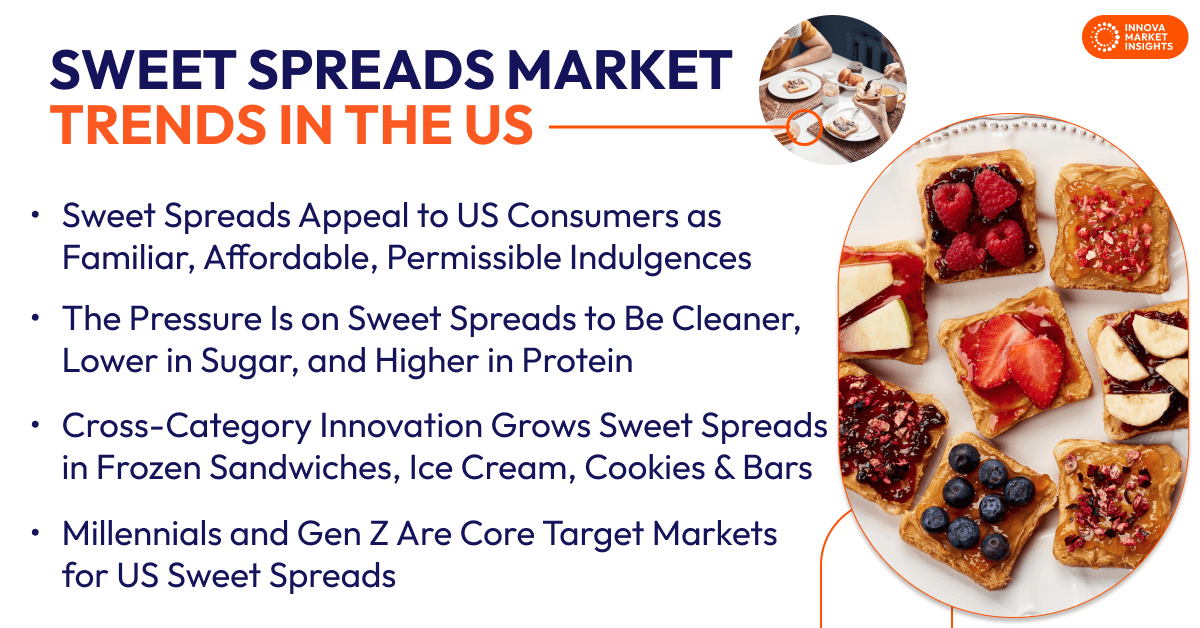
June 15, 2026 – Sweet spreads are easy items to keep in the pantry. They are classic food items. US consumers are familiar with sweet spreads. Many sweet spreads are priced at an affordable price. Also, sweet spreads are a small indulgence for US consumers. Launches of sweet spreads in the US show steady growth, and different demographic groups help support the sweet spreads market in the US.
US Families with Children are a Prime Target
Millennials in the US, ranging in age from 30 to 45, are the most likely generation to have children, especially children 6-18 years of age. That is why they currently are the primary target for sweet spreads. Sweet spreads are a great tool for parent to use to make food such as whole grains, vegetables, and fruits tastier for kids. However, Gen Z in the US is getting older and many are having children. That is why US Gen Z consumers soon will be in the target range for sweet spreads. These target groups are likely to use sweet spreads on their own or in combination with other foods, especially when sweet spreads are better-for-you. Threats to the sweet spreads market in the US include declining birthrates among American families and increased focus on wellness, with US Gen Z consumers leading the way. They are likely to want healthier options for their kids.
Adapting Sweet Spreads to Day Parts
Sweet spreads historically have been used at breakfast. But use of sweet spreads at breakfast in the US is going down. The sweet spreads market in the US must secure use at breakfast and also build use at lunch and dinner. Potential solutions include emphasizing convenience and focusing on sweet spread use for snack, especially since consumers are moving toward snacks rather than big meals. Sweet spreads in the US face competition. One source of competition is protein spreads at breakfast. These are a particularly threat because consumers in the US are highly focused on eating more protein. Another competition for sweet spreads is sandwich fillings, including cheese and lunch meats.
The movement toward snackification presents particular challenges. US consumers view sweet spreads as a topping for bread, especially at breakfast. Next, US consumers think of sweet spreads for use in lunch sandwiches, followed by after-school snacks. The biggest problem, however, is that US consumers are using sweet spreads less for breakfast and this puts pressure on sweet spreads brands to promote sweet spreads for other eating occasions.
Sweet Spreads for Clean Label and Better-for-You
US consumers of sweet spreads are looking for products with clean label claims showing simple and natural ingredients. We have reached a point where US consumers expect clean label claims. Other claims that appeal to US consumers who are concerned about health include higher protein and lower sugar. These claims could become even more important in the future as Generation Z, which is highly conscious of health and wellness, enters parenthood and becomes parents of the target market for sweet spreads, children 6-18 years of age.
Sweet Spreads and Cross-Category Innovation
Sweet spreads can become more relevant with cross-category movement that increases the use of their brand name for different occasions. One example is Nutella, which is increasing awareness and adoption by moving into ice cream. Another example is Smuckers, with its Uncrustables frozen sandwiches. This raises awareness of the Smuckers brand as a sweet spread. Flavored peanut butter might increase its inclusion in cookies and snack bars to boost consumer preference for specific peanut butter flavors.
Combining Bold and Familiar Flavors for Sweet Spreads
Honey provides a good example of how sweet spreads in the US can combine familiar flavors and bold flavors. Honey is growing in the US and a lot of this is driven by mash-ups of honey and other flavors. This also allows honey to charge a higher price. The lesson in this for other types of spreads in the US sweet spreads market and other types of products is to think about which flavors might work well with their core flavor, for example, peanut butter and chocolate. These flavor combinations could appeal to the US consumer and create new opportunities for using sweet spreads.
What’s Next for the US Sweet Spreads Market?
The US sweet spreads market is attractive because sweet spreads can be a permissible indulgence that also is affordable. Innova Market Insights expects to see formats for sweet spreads that are convenient and adaptable to meals and snacks. Look for layers of flavor in sweet spreads, as well as combinations of flavors. Sweet spreads positioned to be better-for-you are likely to have less sugar and more protein and fiber. Sweet spreads with free-from claims could appeal to US consumers who are concerned about artificial and negative ingredients and additives.
This article is based on Innova’s Sweet Spreads in the US report. This report is available to purchase or with an Innova Reports subscription. Reach out to learn more.