



August 21, 2026 – What is sustainable packaging? The term applies to on-pack claims or marketing language that includes at least one claim regarding sustainability. These can include recyclable, compostable, refillable, reusable, biodegradable, recycled content, paper-based materials, or plant-based packaging.
Sustainable Packaging Evolves from Niche to Mainstream
According to Innova Market Insights tracking of new product launches, sustainable packaging no longer is a niche feature. Instead, sustainable packaging is expected, but how quickly it is adopted can vary based on region and product category. New product launch data suggest that the penetration of sustainable packaging recently experienced its greatest one-year jump. However, consumer trends research shows that consumers globally are becoming more skeptical about claims that are not verified. At the same time, they are willing to pay more for products with verified credentials.
Western Europe is the Leader in Sustainable Packaging
Local regulations and the local infrastructure for handling waste create opportunities for sustainable packaging. About two in five product launches in Western Europe carry a sustainable packaging claim. The Asia-Pacific region shows the fastest growth in penetration of claims regarding sustainable packaging. About one-third of North American launches carry a claim regarding recyclable or recycled content, and momentum is strong.
Sustainable Packaging Claims Evolve
Well over half of launches with sustainable packaging carry a recyclable claim. Innova is tracking growth globally in other sustainable packaging claims related to paper-based, mono-material, and refillable. This shows how brands globally are moving beyond basic recycling into specific features.
Consumers Globally Trust Third-Party Certification
Consumer trends research shows that consumers globally trust third-party certifications regarding sustainable packaging. They are increasingly skeptical regarding claims made by brands only. According to packaging consumer trends research, about half of consumers say they are willing to pay more for verified packaging claims. Product launch activity is lower, presenting an opportunity for brands to feature more verified packaging claims. One area of confusion is recyclability, where claims are prevalent but two in five consumers globally are unsure about local recyclability. Sustainable packaging consumer trends research shows that a solid majority of consumers globally want clear instruction, and brands can increase clarity and build consumer trust by using tools such as digital watermarks and QR codes, along with guidance that is specific to the location. This is an opportunity that does not require a lot of investment.
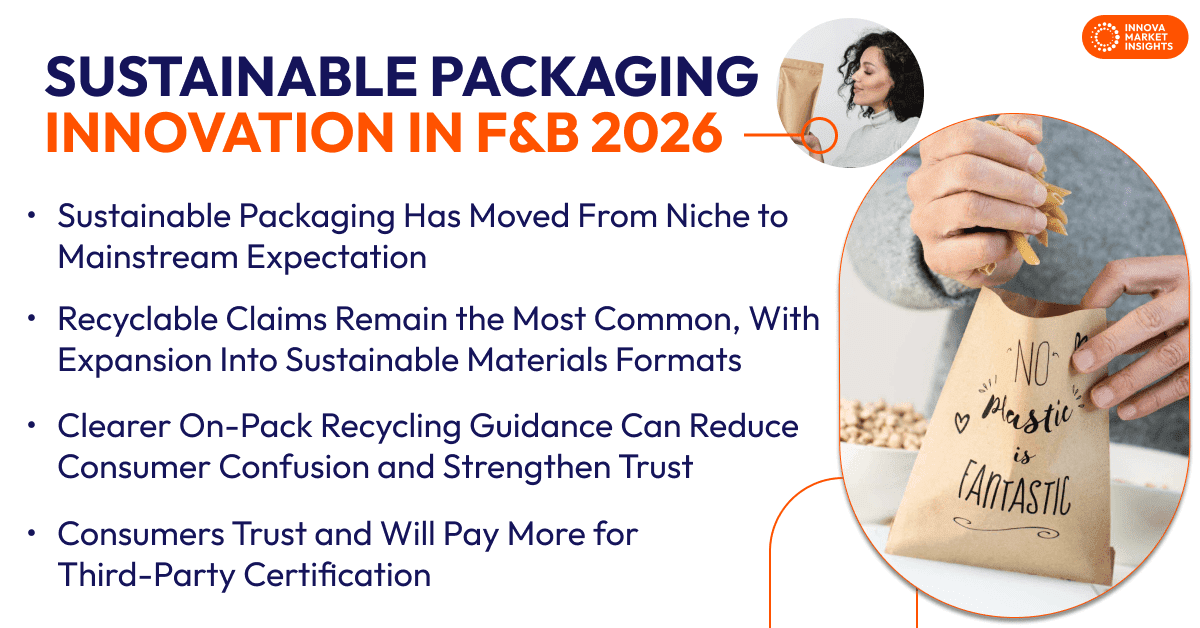
Emerging Packaging Formats Create Opportunities
Global Packaging trends 2026 show that consumers are interested in refillable options but product launch activity is low. Consumers are confused about recyclability, but brands are slow to use digital transparency tools. Innovation in barriers includes plant-derived and water-based coatings that provide flexible packaging in mono-materials. These are well-suited for confectionery and snacks. Other opportunities are alternatives to multi-layer laminates, and expansion of use of molded pulp technology, especially to replace plastic trays. Innovation in recycling technology includes improved PET recycling, increased availability of recyclable beverage packaging, compostable and sometimes edible marine-derived packaging, especially in premium products. Innovation in chemical recycling includes gasification and pyrolysis for recycling of plastics that cannot be processed mechanically. The industry is evolving to support company commitments to reduce use of virgin plastic. Sustainable packaging innovation in smart labels and digital watermarks includes QR-codes and NFC that help consumers understand recycling and verify sustainability efforts. This should help clear up consumer confusion about recycling and improve compliance with local regulations.
Opportunities in Sustainable Packaging Innovation
There’s a noticeable gap between consumer interest and company innovation around refillable and reusable packaging. Sauces and beverages offer high potential for refill systems. Consumer trends show that consumers want flexible packaging for categories such as snacks and confectionery, but industry innovation lags behind. Mono material barriers show high potential for growth. The Asia-Pacific region shows high growth in penetration but from a low base, opening the door for expansion. Local areas have opportunities to gain leadership with new waste infrastructure. Gaps exist between level of consumer confusion about recycling and the low use of digital guidance like QR codes. Companies lag behind consumer willingness to pay more for verified claims and third-party certification. Foodservice and produce could accelerate innovation around industrial composting.
Sustainable Packaging Presents Strategic Opportunities
Several strategic opportunities for sustainable packaging exist. Consumers are skeptical about brand-based claims but trust third-party certification. Brands can invest in certification as a way to boost revenue while protecting against accusations of greenwashing. New technology like mono-material barriers could allow penetration and growth in categories that lag behind in sustainable packaging, namely, confectionery and snacks. Consumers are highly interested in refillable formats and the industry is not matching interest, opening the door for early entrants to capture early market share. Consumers globally are confused about recyclability, and transparent instructions or digital solutions like QR codes can help brands stand out beyond their innovation in materials. Consumer interest exceeds new product launch activity, so early entrants can capture share before actions become mainstream. Sustainable packaging that is specific to a local infrastructure could lead to local market leadership. Finally, companies that secure relationships with preferred providers of materials that are recycled could gain cost and authenticity advantages.
This article is based on Innova’s The Sustainability Value Challenge – Global report. This report is available to purchase or with an Innova Reports subscription. Reach out to learn more