


September 24, 2026 – In the global alcoholic beverages market, premixed cocktails and flavored ready-to-drinks (RTDs) currently convert only a small percentage of global alcohol drinkers. This means, for brands, the opportunity lies with the majority who have yet to purchase these drinks. Moderation trends are working in the category’s favor, with flavor and occasions contributing to the recruitment of consumers. The role of these alcoholic beverages and their trends are also being driven by consumers’ evolving routines, wellness, and preferences. Innova’s Flavored Alcoholic Beverages – Global report explores these major factors impacting the category and where brands should focus their attention to
Which Consumers Should Flavored Alcoholic Beverage Brands Target?
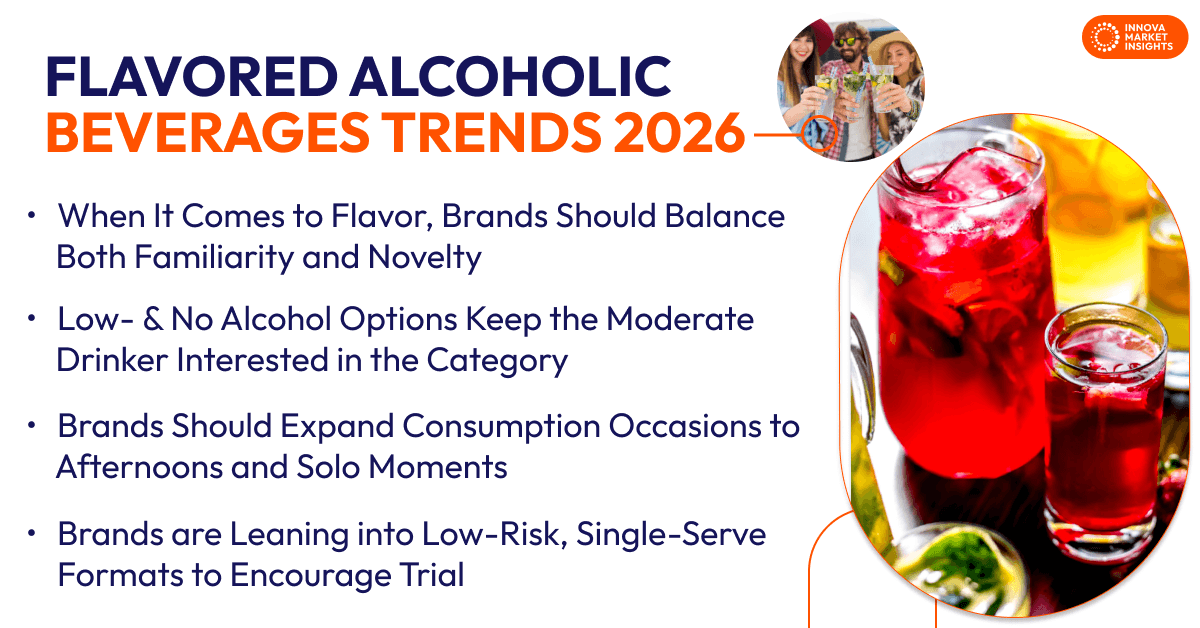
According to Innova’s alcoholic trends research, only 1 in 10 consumers reaches for a premixed cocktail, so brands are leaning into low-risk, single-serve formats to encourage trial. Millennials and women are slightly more likely to drink premixed cocktails, but conversion rates are uniformly low across all consumers. This means the opportunity for flavored alcoholic beverage brands sits with recruiting first time drinkers across the board. Making trial easy and low risk closes the gap and helps to open the category to a wider range of consumers. Growth in the category is driven by overlapping motivations at the same time, highlighting how breadth will be a strength moving forward. More formats and bold flavors can address this.
Which Occasions and Time of Day Should Brands Tap Into?
52% of global consumers say they typically drink alcoholic beverages in the evening, but there is still ample room to expand occasions, particularly in the afternoon. Flavored alcoholic beverages can address different needs from other alcoholic beverage offerings, and communicating this to consumers will be key. For example, they are better suited to mood and moment rather than the routines behind beer, wine, or spirits. Lower alcohol formats and lighter profiles can also make an earlier serve possible.
Brands can also expand occasions by tailoring to solo moments. Portion-controlled, single-serve formats already fit solo drinking occasions, so linking them with habitual solo activities or integrating them into daily routines will promote growth and boost consumption frequency.
How are Moderation Trends Influencing the Category?
Although price remains an important driver, moderation is the real threat to the flavored alcoholic beverage market. Out of consumers who have decreased their consumption of premixed cocktails, 32% attribute their choice to taking control of how much alcohol they drink. Therefore, low- and no-alcohol options keep the moderate drinker interested in the category on their own terms. An accessible price point does stop cost from becoming a barrier, so adding both can give consumers a reason to purchase and continue purchasing.
Which Flavor Trends Are Driving Innovation?
When purchasing premixed cocktails, flavored is the leading product consumers prefer, and brands should balance both recognition and novelty. Innova’s research demonstrates how consumer preference remains with established drinks. These signal a predictable flavor and remove risk. For innovation, this signals that a core portfolio built around classics makes trial easy, and short, seasonal offerings alongside these can keep lineups interesting.
In addition, no single flavor owns the category, but citrus, berry, and tropical encompass the majority of profiles preferred by global consumers. That said, 29% of consumers are more likely to try new flavors in alcohol, meaning brands should compete on range, not just one hero flavor. Bar-grade flavor complexity can also boost appeal.
How Can Functionality Merge with Flavor and Enjoyment?
Beverages are leading innovation in wellness, and this can also merge with new product development in global, flavored alcoholic beverages. Leaning into both convenience and functionality, spiked prebiotic sodas or lightly alcoholic beverages with probiotics or anti-inflammatory ginger can deliver on multiple fronts, including digestive wellness. Combining this with enjoyable taste or simply offering low to no alcoholic versions of these functional drinks can help brands target a wider base and become a more integrated part of consumer routines.
What’s Next for Flavored Alcoholic Beverage Trends?
When considering future innovation opportunities, brands can expect that a balance of bold and familiar flavors will continue to perform well. Limited edition complex botanicals and hybrid profiles will emerge alongside trusted classics, such as citrus. Additionally, texture and process innovations will elevate the RTD cocktail experience for consumers. For example, nitrogen-infused, frozen, and jelly formats can offer unique sensory experiences. With moderation growing in importance for many consumers, brands who can invest now in genuinely flavorful reduced alcohol options will remain relevant.
This article is based on Innova’s Flavored Alcoholic Beverages – Global report. This report is available to purchase or with an Innova Reports subscription. Reach out to learn more.