


May 15, 2026 – The German soft drinks market continues to rise in value and outperform the overall Western European and global markets. In Germany, NPD activity has returned to growth in recent years, after a sharp slump, but it still trails the Western European total. Health continues to remain both a barrier and an opportunity for German consumers making purchases in the soft drinks market. Sugar reduction is driving innovation, but the range of added functionality beyond basic hydration is growing. Innova Market Insights looks at what is driving the category in Germany, as well as new product development and innovation opportunities.
Taste Most Important Attribute in German Soft Drinks Market
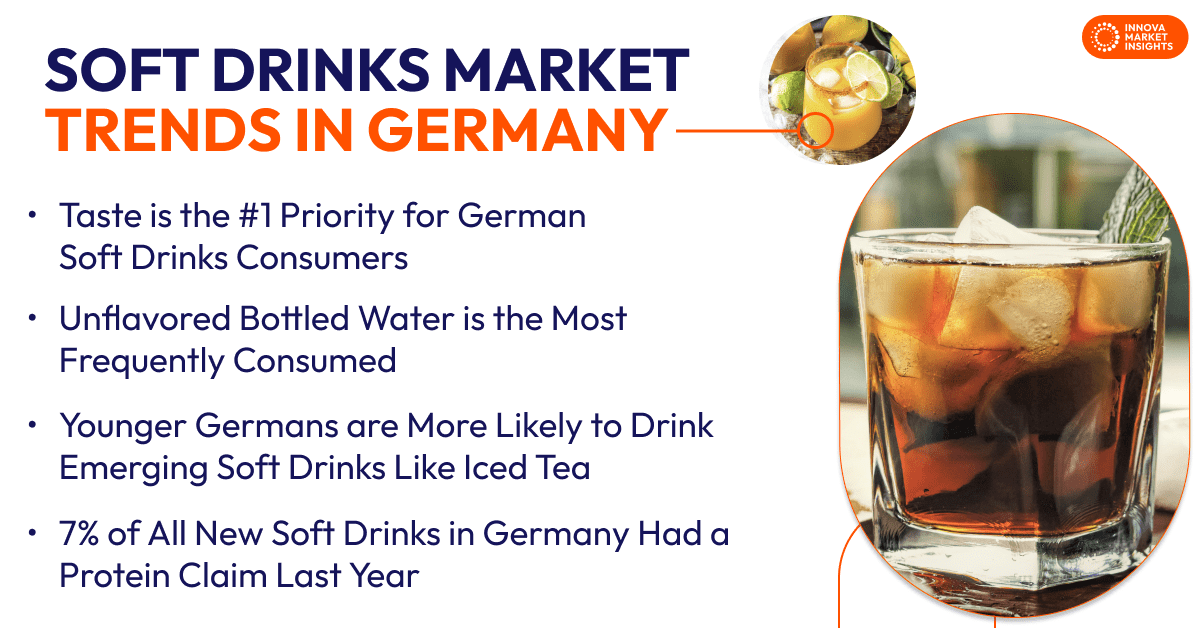
Taste is the #1 priority for German soft drinks consumers across many subcategories, but price is not far behind. This puts pressure on brands to deliver value in the soft drinks market. Specifically, flavor leads in influencing German consumers’ purchasing decisions in subcategories iced tea, carbonated drinks, juices and smoothies, and energy drinks.
23% of German consumers say, when it comes to soft drinks, they are most likely to try new flavors in iced tea. This rises to 39% for Gen Z and 32% for Millennials. Relatively new to the iced tea market is brand Bubble Pop, and flavor innovation is at the heart of the brand strategy, with NPD including rainbow (fruit flavors with a unicorn theme), Sour Tongues (orange and apple to evoke memories of childhood sweets), and Winter Glitzer (a baked apple and cherry flavor combo).
How Does Growth Look Like in the German Soft Drinks Market?
Retail value sales in soft drinks in Germany are showing solid growth. All soft drink subcategories are recording an upward tick, led by drink concentrates, mixed drinks, energy drinks, and iced tea. Germany is in the global top 5 and is the highest in Europe in per-capita terms. As expected, unflavored bottled water is the most frequently consumed, with 83% of German consumers saying they drink it at least twice a week. Bottled water saw the largest net increase in consumers’ consumption habits, with 28% saying they are drinking more.
German consumers are saying that pricing influences their soft drinks consumption. With unabated cost-of-living pressures, this is likely to sway increasing numbers when making a choice at the checkout. Therefore, soft drink brands in Germany should prioritize affordability and value to sustain continued growth.
Who’s Leading Innovation in the Soft Drinks Market?
Major soft drinks brands lead German innovation, with Coca-Cola being the most active. However, innovation is drawing both local and international names, and local brands are certainly holding their own in a busy marketplace. Brand strategies include flavor innovation, expansion, and consumer trust-building. The younger generations in Germany are more likely to consume emerging soft drinks such as iced tea, iced coffee and energy drinks, while the older generations remain loyal to carbonates and bottled water. When innovating, brands need to consider their target audiences across flavor development, health concerns, and promotional activity.
What are the Trends in Soft Drinks NPD in Germany?
NPD activity in Germany’s soft drinks market is on an upward trajectory following an earlier decline. NPD targeting sugar reduction is a core focus for innovators and attention on the environment aligns with consumer interest in areas such as product origin. For example, Danone communicates German sourcing and production for its Volvic Touch brand.
Meal replacement drinks are seeing the fastest growth in NPD terms, as brands move away from simple calorie-counted beverages to NPD offering far broader nutritional advantages. Energy drinks are also performing well, with flavor innovation fueling activity. However, big players, such as Monster and Red Bull, are still driving growth with brand marketing strategies. Interestingly, health is the number 1 factor swaying consumers to increase their consumption of carbonated drinks, aligning with the rise in healthier, functional carbonated drinks.
How Can Health Positionings Place Soft Drinks in the German Wellness Market?
Health benefits are likely to be more preferred in the inherently healthier or functional subcategories. However, protein and fiber claims are growing in soft drinks NPD in Germany. In fact, last year, 7% of all new soft drinks in Germany had a protein claim, up from 2% in 2021. For example, adding milk protein to an iced coffee latte. Additionally, there is potential government pressure on soft drinks to switch to healthier formulations, with a German minister pushing for a sugar tax that targets the soft drinks industry. Innovators need to continue considering lower-sugar, cleaner, and functional options. In iced drinks, while flavor claims are the most influential, health claims, like no artificial colors or flavors, real ingredients and sugar reduction, are also important to German consumers. Health claims and functionality are also influential in juice, bottled water, and energy drinks.
When are Germans Consuming Soft Drinks?
In between meals are the most popular occasions for energy drinks. Juice remains a popular breakfast accompaniment. Consumption of bottled water is relatively consistent across most of the day, reinforcing its general hydration purpose. It is also a popular choice for consumers when eating meals. Consumption of iced drinks is highest in the afternoon, possibly as consumers seek a caffeine pick-me-up, highlighting the need for convenience in iced drink innovation.
What’s Next in the German Soft Drinks Market?
The German soft drinks market will continue to be influenced by health and wellness trends. This includes health-driven reformulation, functional innovation, and clearer brand differentiation. As pressure on sugar reduction increases, brands will likely invest more in zero-sugar options. They will also expand into added-value offerings like protein, fiber, and other health benefits. Meanwhile, limited-edition flavors, sustainability messaging, and stronger digital engagement will continue to be vital soft drink trends for standing out in the crowded German soft drinks market.
This article is based on Innova’s Soft Drinks in Germany report. This report is available to purchase or with an Innova Reports subscription. Reach out to find out more