


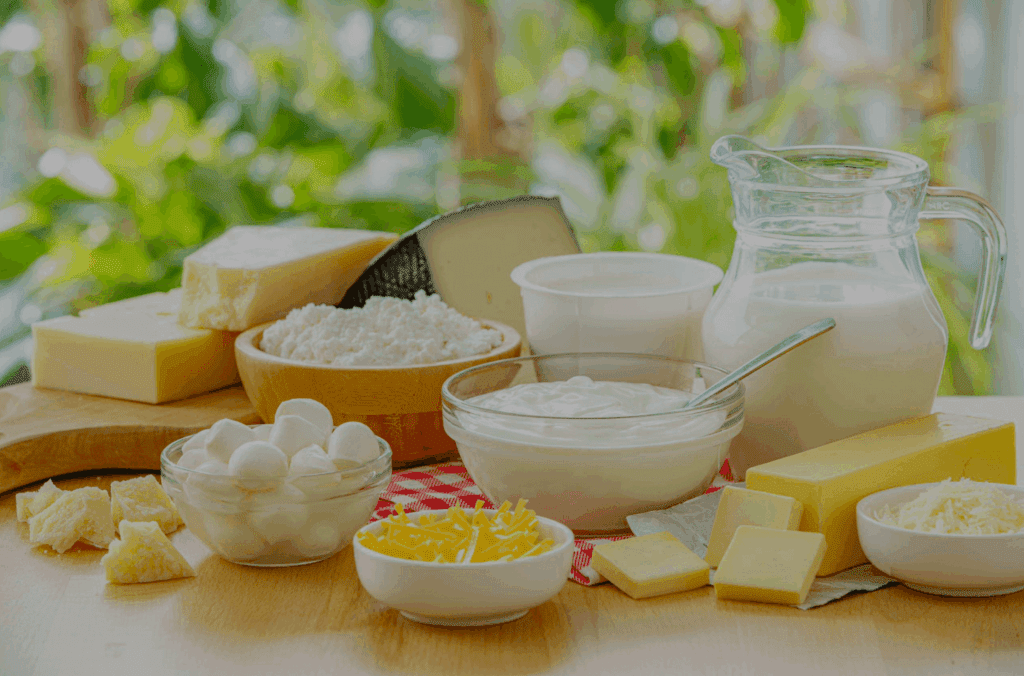
July 6, 2026 – Dairy is a major food and beverage sector in regions around the world. Output is growing in many areas as yield improves, without increases in the number of animals.
What Is The Top Global Dairy Category?
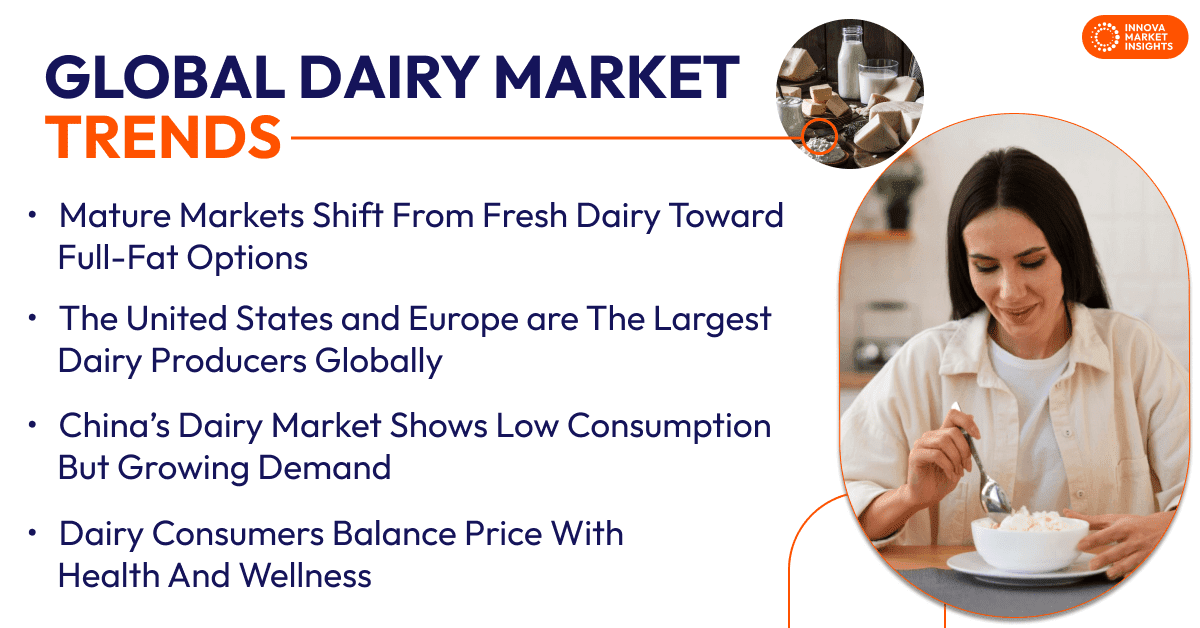
Fresh dairy, the top global dairy category, includes fresh liquid milk, fresh liquid milk drinks, yogurt, kefir, soft fresh cheeses, and dairy desserts. Typically, these are made by local producers in established and in developing global dairy markets. Overall demand for fresh dairy is dropping in Europe and North America but demand for full-fat fresh dairy products is going up.
What Is Happening In The US Dairy Market?
The wealthy United States is a major dairy producer – the largest dairy and milk producer among developing countries – but dairy consumption is lower than in Europe. In the US dairy market, a lot of production goes through dairy cooperatives. Dairy cattle can be raised in sheds or grass-fed on the range. In the US dairy market, dairy cattle also can be used for beef supply. US dairy production costs are up because of increases in the cost of feed, energy and financing, making it hard for dairy operations to expand their herd or production facilities. One way US dairy farms increase milk production is by milking cows at least three times a day, with many farms using computerized systems for milking and feeding. Other advances include milking parlors, advanced breeding techniques, automation, and scientific feed. Because dairy farm profit margins are small, the expense of advanced systems may not impact profits. Currently, US dairy production is up for softer cheeses and butter and stable for other types of dairy products.
What Is Happening In The European Dairy Market?
The European dairy market faces challenges from unstable prices and the growing cost of energy and feed. The overall size of the European dairy herd is down. Also, EU dairy farms are under pressure to reduce their runoff that causes land and water pollution. Among European countries, Germany accounts for one-fifth of milk production and is the largest producer of cheese, fermented dairy products, and butter. France accounts for one-sixth of EU dairy production. Poland is growing, doubling its value of sales. In addition to cow’s milk, goat’s milk and sheep’s milk can be used to produce yogurt and specialty cheeses. Turkey has the potential to be a major dairy exporter to Europe and a purchaser of food companies within Europe. It ranks third in dairy production, after Germany and France. Spain has large UHT capabilities and is the biggest EU dairy producer of processed liquid milk.
Processed milk, yogurt, and full-fat butter production are on the rise for use in manufacturing. The number of dairy producers in Europe is up, although not in all countries. Smaller, independent producers with gourmet or organic dairy are growing in number. Businesses are growing in high-value cheese in small and large European countries. Regional and local cheeses that are made on the farm can add value for the framer, especially given the rising cost of dairy manufacturing in Europe. Dairy employment in Europe is up, especially in France, Italy, and Germany, with the average dairy enterprise employing about 50 people. The small European ice cream industry has a few major suppliers, along with artisanal ice cream produced on dairy farms and in gelaterias. The ice cream industry is growing especially in Belgium, France, and Poland, with employment growing in Denmark, Spain, and France.
How Is China’s Dairy Market Developing?
China is a newcomer to the global dairy market and consumption remains low. Liquid milk, especially UHT, is the major liquid milk market product. Demand for premium pasteurized dairy products is growing in large cities and high-income areas. Foodservice is driving demand for butter, cheese, and cream.
What Does India’s Diary Market Look Like?
Consumers in India (and Pakistan) include a lot of dairy, mostly from local producers. The cooperatives and private dairies in the Indian dairy industry do not use a lot of modern technology.
How Is Dairy Consumption Changing?
Dairy consumers are more conscious of many factors, including cost, health and wellness, and sustainability. Dairy consumption trends reveal that cottage cheese and kefir demand and sales are up, while skimmed milk is down. Attractive health claims pertain to gut health, probiotics and prebiotics, and support for GLP-1 drug users. Dairy maintains an edge over plant-based alternatives. It also may be viewed as less processed. Concerns about UPFs impact several dairy subcategories. Consumers globally need to make value choices about dairy since price increases exceed any increases in income.
What is Next for the Global Dairy Market?
The number of dairy farms is dropping and the dairy market continues to be challenging. Government support and subsidies benefit the dairy farmer, but the industry continues to shrink. Expansion, including increases in employment, could cause prices to go up. In the EU, the mature and slowly growing dairy market has limited potential to grow.
Added-value dairy products have limited volume potential. High protein products are growing in demand but they are taking share away from conventional dairy rather than expanding the market. Use of whole milk powder in infant formula is up in Asia but birthrates are down, so demand is also.
Dairy trends show that demand also is dropping for premium, high-priced European dairy products. However, affluent consumers present an attractive market for luxury and value-added dairy innovation, such as ice cream and desserts.
This article draws on key insights from Innova’s Global Dairy Market report. This report is available to purchase or with an Innova Reports subscription. Reach out to learn more.