


June 23, 2026 – Germany is the second-largest sports nutrition market in Europe and the eighth largest in the world, with new product development continuing to grow each year. While powders remain the most popular in German sports nutrition, sports bars, ready-to-drink drinks, and other categories such as sports cookies, cereals, and puddings are also on the rise. Innova Market Insights explores sports nutrition trends in Germany, looking at consumer motivations, market changes, brand tactics, product launches, and future opportunities for brands in the German nutrition market.
What’s Driving Sports Nutrition in Germany?
Germans today are more conscious of their health needs and more engaged in health prevention, with nearly half taking proactive steps. From a nutritional perspective on health management, 47% of Germans now target positive rather than reductive nutrition.
It is no surprise that young Germans exercise more than older Germans, but many older consumers still engage in walking, running, and cycling. Mobility in aging is a particular consideration for older Germans. Younger consumers also see exercise as fun and use it to boost their mental health. Sports nutrition penetration in Germany remains heavily oriented toward younger consumers, and Gen Z and Millennials are likely to use it to support a wide range of activities, not just workouts. Price is another important consideration for German consumers and can deter them from purchasing sports nutrition products. As a result, many leading sports nutrition brands in Germany run regular price promotions to attract new consumers.
What Do Germans Want from Sports Nutrition?
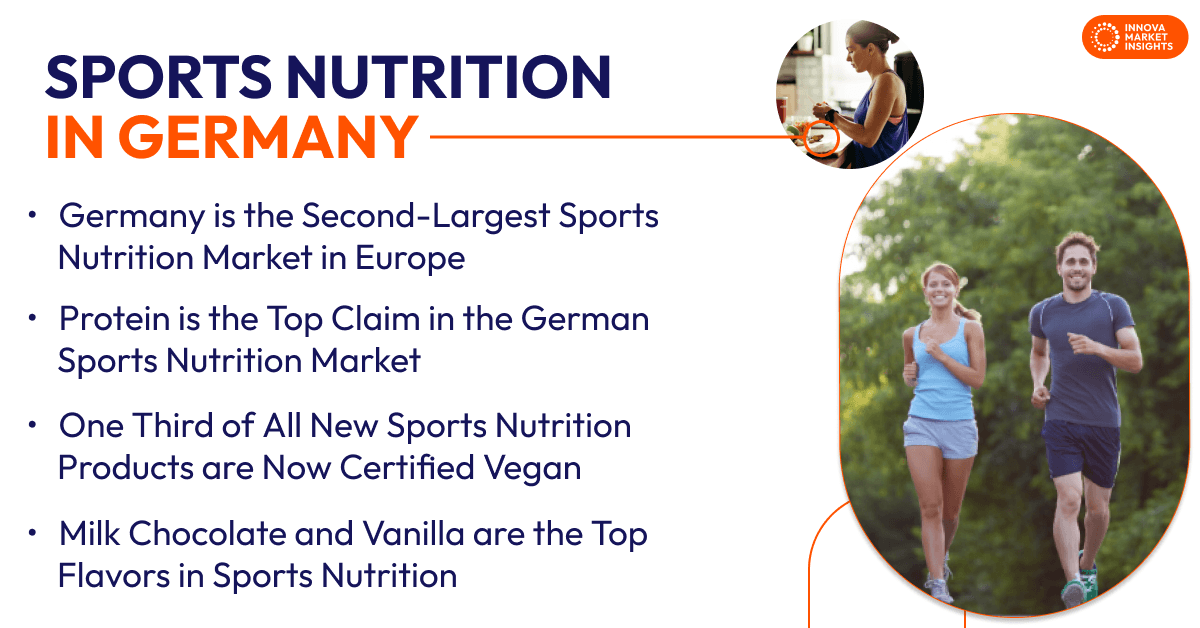
Energy is the most in-demand benefit, ahead of performance, recovery, muscle, and bone health. Protein is the single most important claim in the German sports nutrition market. However, flavor is a close second, so the taste experience should be a key focus. Accordingly, indulgent flavors have been gaining ground in the German nutrition market. Although energy is still the leading benefit German consumers seek from sports nutrition, innovators continue to expand the range of products suitable for other specific needs. For example, hydration is an on-trend claim at the moment. Collagen proteins are also becoming more popular as an ingredient, benefiting from their associations with skin health and joint health, as well as their broader protein benefits.
The Rise of Plant-Based and Vegan-Friendly Sports Nutrition in Germany
Plant-based and vegan diets are increasingly associated with health among German consumers, so it’s not surprising that there’s more focus on this in sports nutrition. One third of all new sports nutrition products are now certified vegan, and over 10% have plant-based claims. In terms of ingredients, fava bean protein is gaining popularity, following the rise of pea proteins, and has nearly doubled its presence in sports nutrition products over the last five years. For example, the Be Keto brand has recently introduced a new range of vegan-friendly protein powders in Germany, featuring its 100% Vegan Protein Blend, which includes pea, fava, and almond proteins. Some major brands also take advantage of Veganuary, when many people try a vegan diet in January, to promote their plant-based options.
Why Is Sports Nutrition Expanding into Treats in Germany?
The expansion into mainstream treats is very much in line with the sports nutrition category’s growing focus on positive taste experiences. Germans want products that can deliver a boost of protein, amino acids or electrolytes, but also want them to taste good. Caramel is an on-trends flavor across the board, while multi-layered indulgent textures are a growing focus in sports bars.
What Are NPD Trends in German Sports Nutrition?
Germany is ranked eighth worldwide in retail sales, though its growth remains modest relative to other markets. NPD has achieved double-digit growth from 2021 to 2025. The fragmented sports nutrition sector is increasingly entering mainstream markets, with private label products making up 1 in 20 launches in Germany. German consumers are increasingly choosing snacks and on-the-go options, which boosts the popularity of single-serve sports drinks and bars. Brands are looking to cross over into broader food categories, from cookies to puddings, offering a variety of new products. Mainstream brands are adding protein to appeal to active consumers, with some incorporating specialized ingredients like creatine, as demonstrated by Ehrmann.
What Are Opportunities for Sports Bars in the German Sports Nutrition Market?
Sports bars represented more than 1 in 5 of all nutrition launches in Germany in 2025. This subcategory is also diversifying, with specialist sports nutrition brands being joined on shelf by more mainstream bars and even private label products. Sports bars also represent an opportunity to bring indulgence into sports nutrition.
Multi-layered textures are very much on trend, with soft, crunchy, and even liquid textures often combined to create more enjoyable taste experiences. For example, the All Stars Fitness brand has recently launched a new collection of Smooth Core protein bars in Germany, each with a soft, liquid center encased in a creamy layer and topped with a chocolate coating with crispy pieces.
What Are the Trending Flavors in German Sports Nutrition?
Milk chocolate and vanilla remain the two leading flavors in use within sports nutrition in Germany, but caramel is still increasing in popularity. This demonstrates the continuing importance of indulgence within the German sports nutrition market, with other flavors like pistachio and coffee also trending. Coffee is particularly well-suited to beverages and has even led to the creation of an entirely new iced coffee category within protein powders. The NeoSupps brand has ventured into this niche, introducing Caramel Macchiato and Vanilla Cookie Protein Iced Coffees.
What’s Next in Sports Nutrition in Germany?
Sports nutrition is moving beyond traditional products into cookies, cereals, and candy. This shift is creating options that appeal to a wider audience. Younger consumers are the primary market, but there is also an opportunity for sports nutrition products for older German consumers, particularly aimed at improving mobility and joint health. The demand for hydration products is rising in Germany, which shows a potential area for growth. Collaborations can also help sports nutrition brands reach mainstream consumers in Germany. Additionally, improvements in AI provide personalized advice, making it simpler to meet individual needs in nutrition. Still, cost remains a challenge, and brands must demonstrate their value to encourage more German consumers to purchase sports nutrition products.
This article is based on Innova’s Sports Nutrition in Germany report. This report is available to purchase or with an Innova Reports subscription. Reach out to learn more.