



August 19, 2026 – In Europe, the alcoholic beverage market is experiencing a change. The categories that defined it for decades are now giving way to more varied choices, but the category is facing many challenges. The health impacts of drinking are of greater concern to consumers, and there is a rise in more moderate drinkers, despite the fact that alcohol still remains an important part of the European social scene. Innova’s Alcoholic Beverages in Europe report maps out the shifts in the market and where the opportunity exists for brands.
Which Alcoholic Options and Countries Lead the Category?
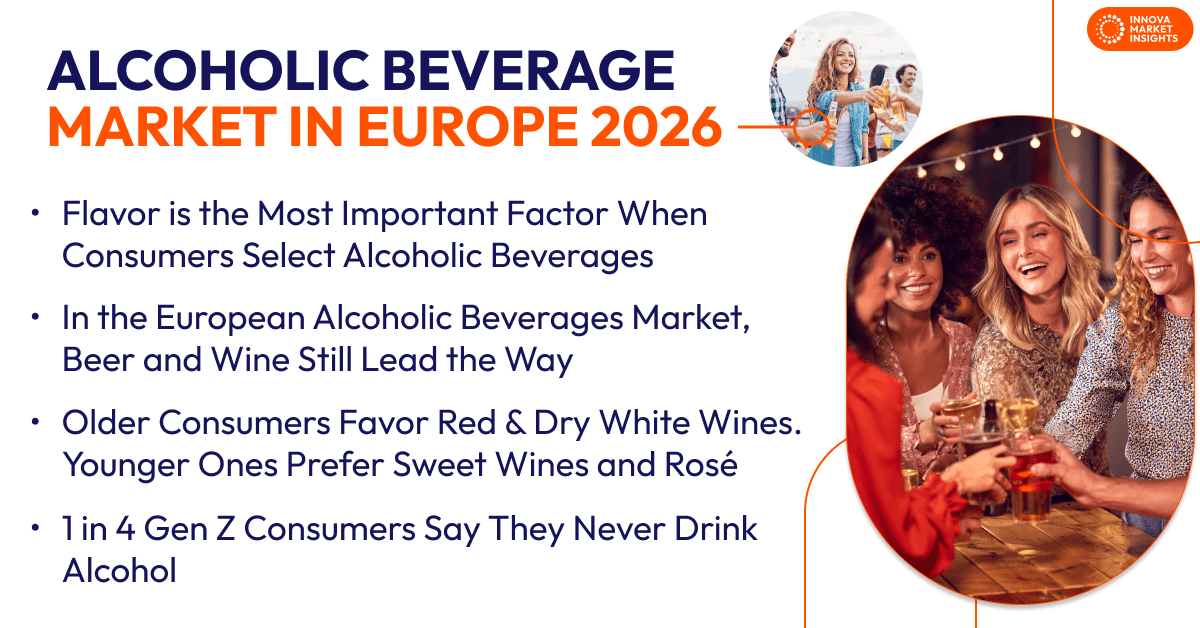
In the European alcoholic beverages market, beer and wine still lead the way, accounting for 37% and 33% of the market respectively. Within beer selections, light lagers and pilseners are the most preferred beer types, and there is a slight preference for craft beers. When it comes to wine, consumer alcoholic beverage trends highlight that red is the top preference, though consumers drink more than one type. In terms of generation, older consumers tend to favor red and dry white wines, while sweet wines and rosé have a more modern image, appealing to younger consumers.
Within Europe, Germany leads the way in market value, followed by France and Italy who are boosted by large wine markets. Eastern Europe ranks highest for per-capita consumption of alcoholic drinks. Over the entire European market, beer continues to lead new product development, but spirits are gaining share.
How is Gen Z Influencing the Drinking Culture in the European Market?
In the European market, consumer alcoholic beverage trends indicate that drinking culture is changing, with moderation and modernity driving the attitudes of younger consumers. 1 in 4 Gen Z consumers say they never drink alcohol, and non-drinkers are no longer perceived as an anomaly. Low and no alcohol products are therefore driving the market more. The rise of mocktails and alcohol-free versions of alcoholic staples also means that all options, both alcoholic and non-alcoholic, are perceived as equal in terms of social media sharing and aesthetic appeal. When they do drink, younger consumers in the European alcoholic beverages market are drawn to modern beverage categories like flavored alcoholic beverages, flavored beers, and spirits.
Which Flavor Trends Are Driving Alcoholic Beverage Choices?
In the European alcoholic beverage market, flavor is the most important factor that consumers consider when they select drinks. Only 1 in 4 new alcoholic beverages contain an added flavor, but the rise of them in new product development highlights how flavored products have gained share. No single flavor accounts for more than 1.3% of launches, but Innova’s research shows that fruit flavors dominate. The demand for more modern drinks with added flavors has also driven growth in flavored alcoholic beverages and spirits and liquors.
For alcoholic beverage choices, a few key flavor trends are impacting the market. For instance, when looking to indulge, consumers are drawn to sweet and dessert flavors, and as a result, opportunities exist for brands to offer experiences that deliver moments of luxury. In addition, Innova’s research shows that over half of European consumers say they try new food and beverages when dining in restaurants, while others are open to traditional products with a twist. Manufacturers can leverage these consumer alcoholic beverage trends by taking unique beverages from bars and restaurants and transferring them to retail products, especially those with international flavors or a modern image.
How Can Alcoholic Beverage Brands Draw in Younger Consumers?
To draw in younger drinkers, alcoholic beverage brands in Europe are modernizing familiar offerings and altering their messaging to reflect current consumer mentalities. Brands like the French Bordeaux wine company, Charles et César, are leveraging social media and festival partnerships as their strategy. Additionally, Pernod Ricard’s Absolut vodka brand is leaning into flavor novelty, as demonstrated by their recent spicy Tabasco variant. Spicy flavors are on trend with younger consumers, and their promotional content for the product also taps into modern cocktail culture, as well as the trendiness of hot flavors. Celebrity endorsements also remain an important element of advertising in promotion, alongside messaging on emotional connections and individuality.
What’s Next for Consumer Alcoholic Beverage Trends in Europe?
Brands looking at the latest beverage innovations must recognize a few key trends that will continue to impact the market. Health will remain a significant driver, so alcohol reduction will continue to impact development. There is also an opportunity for functional alcoholic options. For younger consumers, flavor will continue to drive development, as they seek new and exciting experiences. Brands can expect that adding modern twists to traditional beverages like beers, wines, and spirits will resonate with consumers.
This article is based on Innova’s Alcoholic Beverages in Europe report. This report is available to purchase or with an Innova Reports subscription. Reach out to learn more