



July 13, 2026 – Europe is a solid marketplace for alcoholic beverages. It has high per capita consumption, led by Eastern Europe, along with a high percentage of global alcohol launches. Italy, Spain, and France tend to have more traditional tastes while consumers in the UK and Germany often are more experimental. But the alcohol beverages market in Europe is changing because of health implications and moderation.
Various Alcoholic Beverages are Consumed
Alcoholic beverages in Europe include many types of products. Beer encompasses unflavored beer, flavored beer, ale, lager, and stout, along with light beer and alcohol-free beer. Cider can be flavored, unflavored, or alcohol-free. Hard liquors include brandy, gin, liqueur, rum, tequila, vodka, and whiskey. Wines can be conventional or fortified. Flavored alcoholic drinks and hard seltzers also are included. Fast growing alcoholic beverages innovation can be seen in spirits, liqueurs, and flavored alcoholic beverages.
Alcohol is for Social Occasions
Alcohol in Europe continues to have a connection to social situations and products are available for many types of occasions. Alcohol also is tailored to generations in Europe. Younger European consumers enjoy cocktails and flavored drinks with new taste experiences. They also are apt to spread drinking alcoholic beverages over the course of the day. Older generations value tradition and may seek both value and an ethical angle. They are a group that tends to have alcohol mainly with meals and in the evening. Alcohol-free has a growing presence in the European alcohol beverages market. Alcohol preferences and consumption habits vary from country to country across Europe so local nuances are important.
European consumers of all ages are concerned about their health and many are drinking less. A sizeable number of European consumers either drink less than once a month or never drink. Binge drinking is less common and non-drinkers are more widely accepted. The introduction of low-alcohol and no-alcohol products affords European consumers the flexibility to drink alcohol some of the time and go zero-alcohol at other times. Another meaningful innovation is mocktails that look like standard alcohol cocktails and are equally suitable for photos and social media posts.
Gen Z Savor the Flavor of Alcoholic Beverages
Younger European consumers stand out for their alcoholic beverage preferences. They are more drawn to drinks that are flavored, including flavored beers, flavored alcoholic beverages, and flavored spirits. Fruit-flavored beers are more popular among European Gen Z consumers than among other generations. Gen Z consumers also prefer sweeter wines, rosés, mixable clear spirits, and seasonal flavors. They also are drawn to co-branded alcohol beverages.
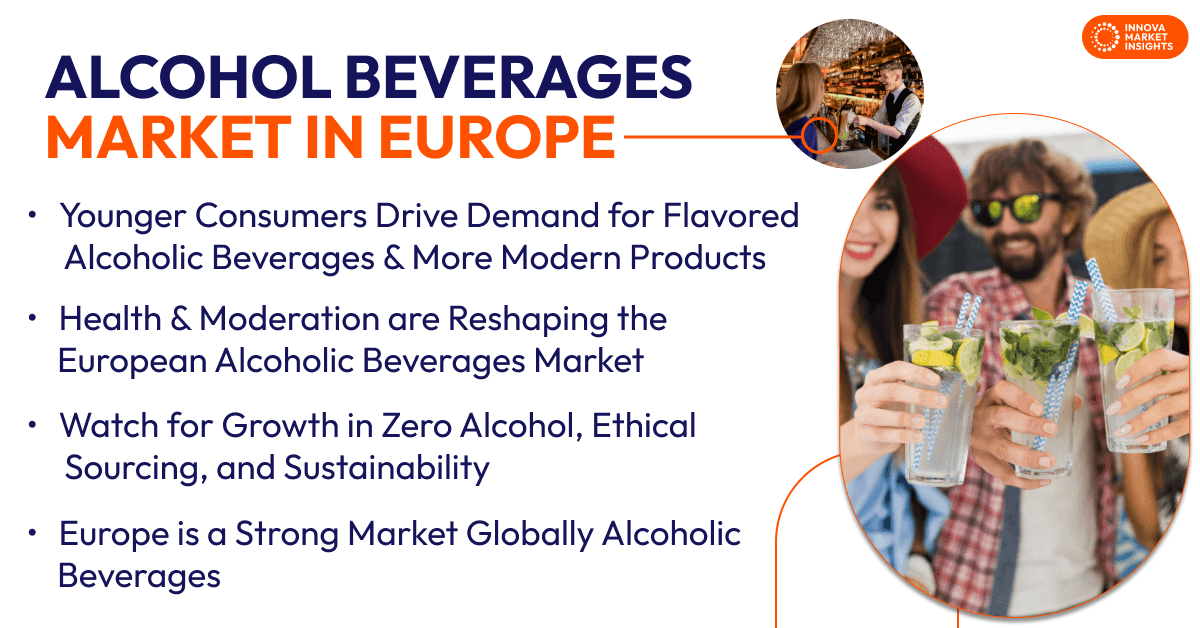
Time of Day for European Alcohol Beverages
Younger European consumers tend to drink at various times of day rather than just at mealtime or in the evening. The availability of zero-alcohol options opens up opportunities for drinking after sports or while on a road trip. Cocktail culture also matters to the younger generations of European consumers who enjoy the variety of alcoholic drinks and spirits that are available for mixed cocktails.
Health is a Key Driver
European consumers care about health, and that is helping drive options for the sober-curious. A solid percentage of European consumers are cutting back on alcohol as a way to eat more healthily. They are highly interested in participating in a sober month. They are trying to drink less but also are choosing higher quality alcoholic beverages. Cutting down on alcoholic beverages especially is impacting wine and spirits. Premixed drinks and lower-alcohol beer are doing better than other alcohol drinks.
Zero-Alcohol has an Opportunity
Zero-alcohol drinks are becoming more popular, especially among younger generations of European consumers. The market share for no-alcohol drinks in Europe is growing, especially in wine and beer.
Watch Out for Changes in the European Alcohol Beverages Market
One change is a growing number of ethical claims on European alcoholic beverages because sourcing is a key issue of importance to European consumers, second to taste. Package claims regarding human welfare and the environment solidly are on the rise in wine, spirits, and beer. These claims have tripled in penetration in a recent five-year period, led by claims about the environment and followed by claims about sustainability and human welfare. Tradition continues to be a consideration and driver, with strong growth especially in wines and spirits.
This is especially true for older generations of European consumers. In contrast, traditional beers are losing share because of beers that are flavored and more modern to appeal to younger consumers. Other influential features that add value are local sourcing, country of origin, artisanal crafting, and traditional production methods. Local European markets differ a lot in consumer preferences and different types of alcoholic drinks that are available. The UK and Germany are different from Spain, Italy, and France because the alcohol beverages market in the UK and Germany is more modernized. Consumers are interested in flavored and more unusual beverages. Italy, France, and Spain tend to be more closely tied to traditional drinks like wine.
What’s Next for the Alcohol Beverages Market in Europe?
Watch for real world connections in promotions of alcoholic beverages, including slower living and time-outs from technology. Drinks will become for flavor-forward to appeal to novelty-seeking younger consumers. Expect traditional alcoholic drinks to explore excitement in taste, since taste is the top consumer driver. The European alcohol beverages market will have healthier options like lower alcohol content and functional ingredients. A focus on mental health encourages consumers to be individuals. Drinking culture will change, with more modern options and evolving consumer behaviors.
This article is based on Innova’s Alcoholic Beverages in Europe report. This report is available to purchase or with an Innova Reports subscription. Reach out to learn more.