



July 15, 2026 – Financial pressures remain a key issue for consumers, and inflation in Europe is projected to remain elevated. At least in the near term, cost-of-living concerns will continue to impact consumer confidence and spending. However, while Europeans are more careful about what they spend and are scrutinizing value more closely, they are not always making decisions on price alone. They are adopting smarter, more flexible spending approaches, carefully weighing up options and remaining willing to spend more on features, benefits, and experiences that they deem are worth it. Innova Market Insights assesses these consumer spending trends in Europe, looking at differences, like regional and generational, and discussing opportunities tailored to each group.
Why Are European Consumers Cautious About Their Spending?
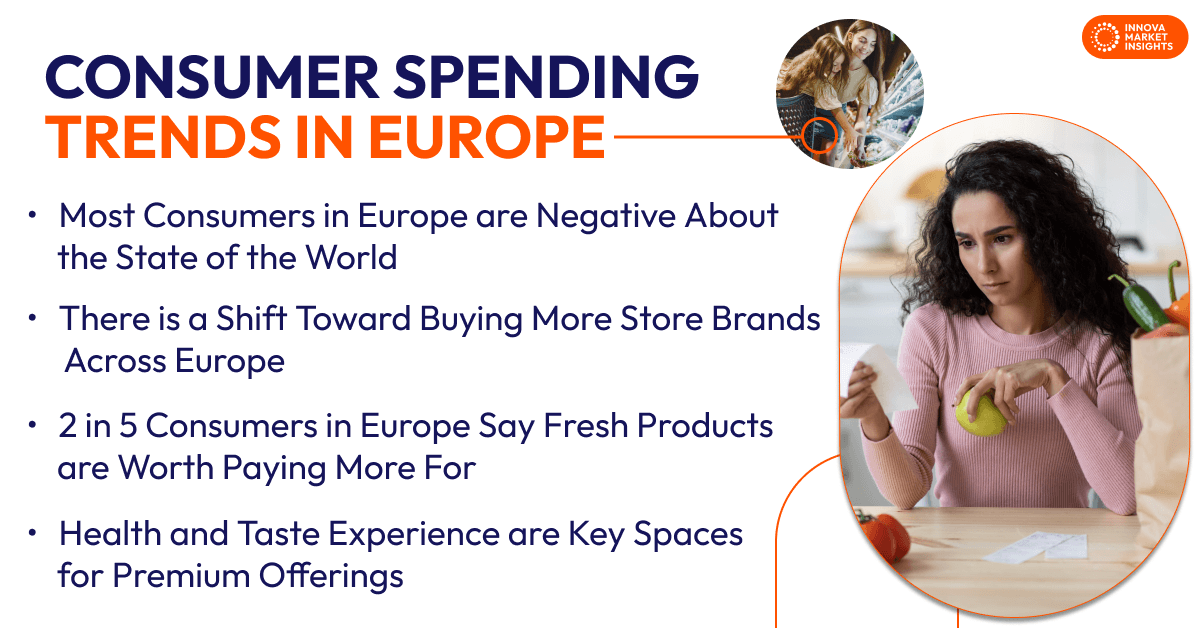
Most consumers in Europe are negative about the state of the world, and more are negative than positive about their country’s economic outlook, which drives uncertainty about the future and impacts consumer confidence. Negative sentiment is highest in Spain and France. Contributing to the financial pressures in Europe is a lack of affordable housing and healthy food, coupled with concerns about wages not increasing and job availability. Most Europeans actively look for ways to optimize their spending and are more careful about what they spend on food and beverages now than a year ago.
How Are Europeans Viewing Price and Value in Purchasing Decisions?
When it comes to purchase decisions, Europeans are scrutinizing prices and value more closely. Consumer spending trends indicate that more than 3 in 5 are more careful about evaluating whether a product is worth it and check prices even on small items. Younger consumers adopt more flexible approaches to manage what they spend and where, being more likely than older generations to cut back in some areas to spend more in others and to alternate between premium and budget versions of the same product. Among over half of consumers, there is a shift toward buying more store brands. When trying to spend less, Europeans primarily limit themselves to buying essentials as well as buying cheaper brands. As European consumers weigh up options more carefully, brands need to make value visible and tangible.
What Are the Opportunities in Premiumization in European Food and Beverage?
European consumers who are spending more on food and beverages are doing so not just because of price increases. Healthier eating and cooking from scratch are the leading reasons, while freshness, local provenance, and cleaner labels are top features they will pay more for. 2 in 5 consumers in Europe say fresh products are worth paying more for, while 1 in 4 say locally produced products are worth a premium price. Europeans will also pay more for products with fewer artificial ingredients, reflecting current consumer spending trends.
How Do Consumer Spending Habits Differ Between Generations in Europe?
Food and beverage choices, such as eating more protein, mood-boosting consumption, and buying higher-quality products, are more common drivers for increased spending among younger generations than older ones in Europe. Millennials are more likely to say buying higher-quality foods is a reason they spend more (22%), especially compared to Boomers (6%).
How Can F&B Brands Attract European Consumers?
European consumers are considering their choices more carefully, paying closer attention to price and adopting more flexible spending approaches. This makes a clearly communicated and tangible value proposition key. Brands need to work harder to justify premium pricing. Health and taste experience are key spaces for premium offerings, while consumers are spending more on healthier options, ingredients to cook from scratch, and higher-quality products. They are also willing to pay more for freshness, local provenance, and fewer artificial ingredients. Premium food to eat at home is a growth opportunity, especially among younger generations and those on higher incomes, and is therefore a space where brands can establish their premium credentials.
Why Must F&B Brands Adapt Strategies Across Generations and Income Levels in Europe?
Differing attitudes to value require brands to tailor distinct product and communication strategies to effectively target the needs of different groups. Consumer spending trends show that Gen Z is more willing to pay for functionality and experience in food and beverages than Boomers. Mood boost or treat, physical and mental benefits, protein, convenience, and quality are strong added-value levers for Gen Z. Boomers are more price-conscious and less likely to engage with added-value levers. However, freshness and local provenance are the features they are willing to pay more for. Higher-income consumers are also willing to pay more for a wider range of benefits and features in food and beverages than lower-income groups, including premium ingredients and sustainable packaging, with implications for targeting and proposition development and finer tuning.
How Do Varying Financial Situations Look for Consumers Across Europe?
Consumers in European countries are experiencing and responding to current financial pressures differently, requiring brands to reflect country dynamics in their strategies. Consumers in the UK are relatively upbeat about their country’s longer-term economic outlook and their own current and future financial situation, while consumers in France are feeling much more downbeat. When it comes to buying behavior, UK consumers show greater flexibility in the choices they make than those in other countries. German consumers favor brands switching (cheaper brands and more store brands) to spend less while consumers in other countries prioritize buying other essentials.
What’s Next in Consumer Spending Trends in Europe?
Brands need to understand where they sit within broader and often more complex consumer decision-making in Europe to help them retain and strengthen their relevance. Premiumization opportunities exist in food and beverage, though a targeted approach is needed as there are key differences between younger and older generations in terms of where they will invest and what’s worth paying more for, with income level also a key factor in Europe. With differing needs across the continent, crafting, communicating, and delivering a clear and tangible value proposition for each target audience is even more critical for brands.
This article draws on key insights from Innova’s Cost of Living: Impact on Consumer Spending Behavior in Europe report. This report is available to purchase or with an Innova Reports subscription. Reach out to learn more.