



June 25, 2026 – Low and no alcohol beverages are popular in Europe, including alcohol-free beers in Northern Europe and dealcoholized wines in Southern Europe. New product development continues to increase, with demand transitioning from moderation-based to taste-driven. This positions Europe as a global leader in the adoption of alternatives to alcoholic beverages. Innova Market Insights looks at low & no alcohol market trends in Europe, looking at regional differences, positioning, innovation trends, and opportunities for brands.
Why Are Europeans Drinking Low & No Alcohol Beverages?
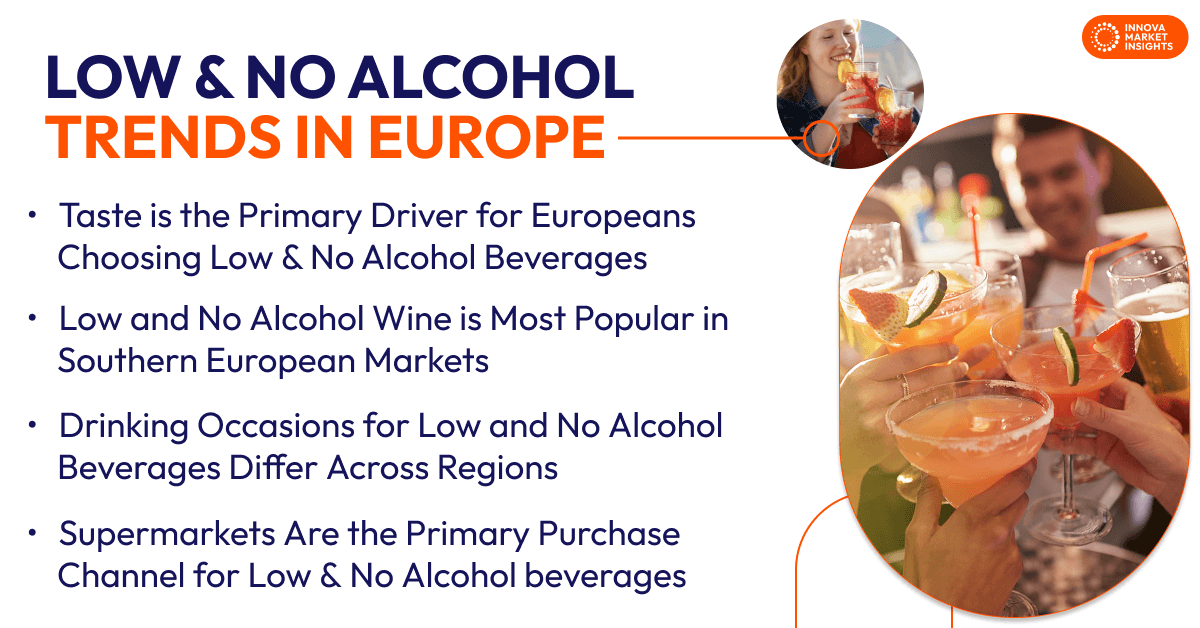
Taste is the primary driver for European consumers choosing low and no alcohol beverages. Additionally, demand for low & no alcohol in Europe is driven by the desire for control over drinking habits as well as health concerns. Control is the key driver in the Netherlands, while health is prioritized by Spanish consumers.
In Which Parts of Europe Are Low & No Alcohol Beverages Popular?
Low and no alcohol beverages are particularly popular in the UK, Germany, and Denmark, which lead Europe in both innovation and market penetration. The UK has the widest range of new product launches across beer, wine, spirits, and ready-to-drink beverages. Notably, Germany and Denmark have high adoption rates of non-alcoholic beer. In Southern Europe, including France and Italy, non-alcoholic options are expanding within the wine and aperitif categories.
In Which European Markets Are Low & No Alcohol Beer Doing Well?
Low and alcohol-free beers are most common in Germany, the UK, and Poland. In Germany, tradition and high brewing standards have resulted in high-quality non-alcoholic beers. In the UK, pub culture has driven demand for non-alcoholic beer as an inclusive social alternative. In Poland, a strong beer culture combined with increasing health awareness positions the country as a key growth market for low & no alcohol beer.
Which European Markets Are Leading in Low and No Alcohol Wine?
Low and alcohol-free wine is most popular in Southern European markets such as Italy, France, and Spain. In these countries, wine is associated with meal culture, influencing consumption patterns for non-alcoholic wine. Despite technical challenges in developing non-alcoholic wine, its popularity is increasing as dealcoholizing techniques advance.
When Do Europeans Consume Low and No Alcohol Beverages?
In Europe, drinking occasions for low and no alcohol beverages differ across regions. In Northern Europe, including Sweden, Germany, the Netherlands, the UK, and Poland, low & no alcohol beverages are mostly drunk in the evening, reflecting a focus on socializing outside of mealtimes. In Southern Europe, consumption is strongly linked to mealtimes, with low and no alcohol drinks consumed alongside lunch and dinner. Spain is known for its late-night drinking of these beverages. Poland, on the other hand, has high afternoon consumption, presenting opportunities to position non-alcoholic beverages for afternoon social occasions.
Where Do Europeans Purchase Low & No Alcohol Beverages?
Supermarkets are the primary purchase channel for low & no alcohol beverages in Europe, particularly in the UK, France, Spain, Italy, the Netherlands, and Germany, where they account for more than half of sales. Specialist alcohol retailers are also a key purchase channel, especially in Sweden, the Netherlands, and France. Restaurants, bars, and pubs also serve as important secondary channels in countries such as Sweden, the UK, and Italy, where the availability of non-alcoholic options encourages trial and normalizes consumption of low & no alcohol beverages.
How Often Do Europeans Drink Low & No Alcohol Beverages?
The frequency of low and no alcohol beverage consumption varies across Europe. In Spain, 26% of consumers drink low and no alcohol beverages at least twice weekly. The Netherlands, Italy, and the UK also have high rates of regular consumption, with approximately one quarter of consumers drinking low and no alcohol beverages. Elsewhere, in Sweden and Poland, consumers are drinking low and no alcohol beverages less than once per month.
What Are the Trending Claims in Low & No Alcohol Beverages in Europe?
Key low and no alcohol beverage trend claims in Europe revolve around wellness, premium craft positioning, and indulgent taste experiences. Claims related to low, no, or reduced sugar are common, showing that consumers are looking for genuinely healthier options rather than just alcohol-free beverages. Traditional and craft claims are especially popular in Spain and Sweden, reflecting a preference for artisanal offerings. Indulgence claims are particularly prominent for sober curious in Poland and Sweden, aligning with the broader trend toward positive, taste-driven experiences.
What Are Innovation Trends in the European Low & No Alcohol Market?
Innovation in the European low & no alcohol market is led by the UK and Germany, where new product development (NPD) penetration is highest. The UK distinguishes itself through the breadth of its innovation, launching the widest range of low & no alcohol beer, wine, spirits, and ready-to-drink products. Germany and Denmark are also leaders, with high innovation rates driven by frequent consumption, diverse drinking occasions, and an increasing emphasis on premiumization. In Southern Europe, innovation is increasingly directed toward non-alcoholic wine and aperitif products, reflecting local traditions and meal culture. Across Europe, successful innovation aligns with regional drinking styles: craft and taste in the North, meal pairing and sophistication in the South, and premium experiences in Nordic markets.
What’s Next in European Low & No Alcohol Trends?
The European low & no alcohol market is expected to continue expanding through several key opportunities. These include the growth of non-alcoholic wine in Southern Europe, where meal culture drives demand for high-quality, meal-compatible alternatives. Furthermore, the development of functional beer in markets such as Germany, the UK, and the Netherlands will be driven by consumers seeking additional health benefits. Additionally, the expansion of premium options, with more sophisticated non-alcoholic cocktails and wines, will become more widespread in bars and restaurants, particularly in the UK, Sweden, and Italy. We can also expect increased occasion-specific branding targeting a broader range of moments, as well as the emergence of a non-alcoholic aperitivo category, especially in Spain and Poland, where social and afternoon drinking occasions are prevalent.
This article is based on Innova’s Low & No Alcohol in Europe report. This report is available to purchase or with an Innova Reports subscription. Reach out to learn more.