



July 15, 2026 – Personal well-being and environmental concerns are driving food and beverage choices in Germany, leading to an increased preference for more nutritious and responsibly sourced F&B products. Innova Market Insights looks at these food and beverage trends in Germany. Looking at these trends, we discuss what’s driving changing demand across food and beverage categories.
Quality and Freshness Important for German Food & Beverage Consumers?
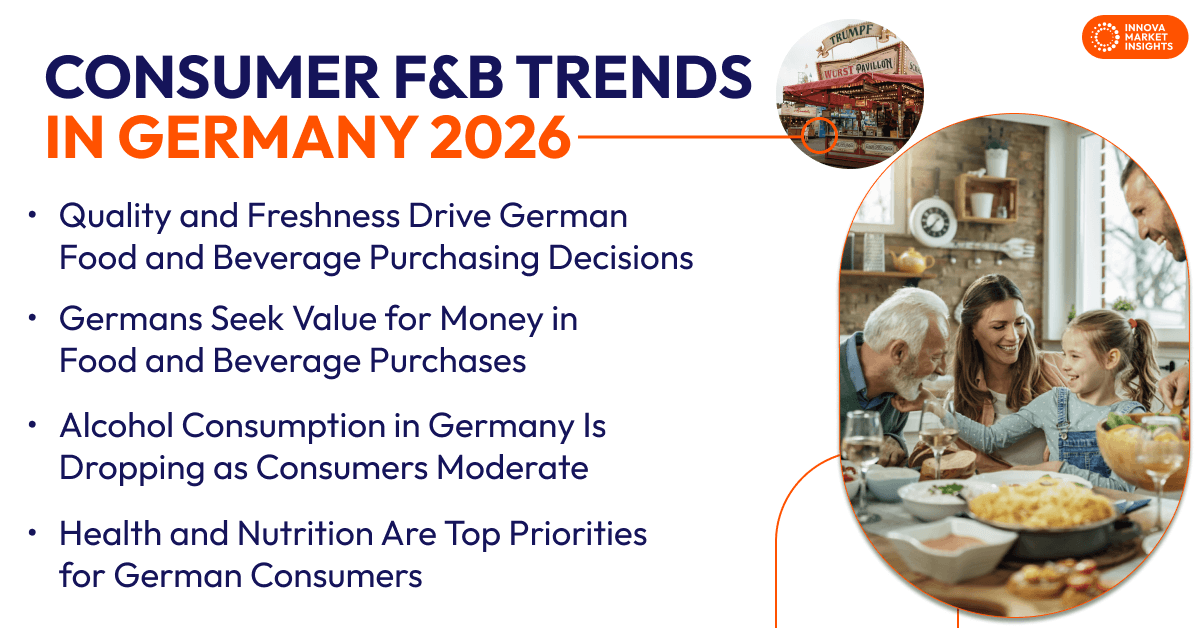
In Germany, purchasing decisions across food and beverage categories are influenced by factors related to quality and freshness. These factors include ingredient quality, product origin, minimal processing, and clear labeling. In particular, fresh baked goods and organic products are popular among German consumers. Quality and freshness are also connected to the rising importance of clean labels in the German food market. Clean label claims are affecting choices in the cereal bars category. For example, claims such as reduced sugar, real ingredients, no artificial flavors or colors, palm oil free, and high fiber or protein are influential in cereal bar purchasing decisions. Similarly, clean labels and nutritional claims influence consumer choice of dairy alternatives in Germany. In this category, claims like plant-based, reduced sugar, real ingredients, no artificial flavors or colors, organic, palm oil free, and high protein are sought.
How Does Price Affect German Consumer Food & Beverage Choices?
Germans often look for value for money when making food and beverage purchasing decisions. They assess whether food and beverage products are worth the price based on factors such as quality, functionality, and experience. Therefore, it is still possible to attract German consumers to products with a higher price tag if they offer better benefits. For example, in the meal preparation category, Hoisin Sauce from Yakso, offers the additional benefit of being organic. In Germany, budget concerns and affordability are also driving higher consumption of meal preparation products like bouillons and seasonings.
Are Health Concerns Affecting the German Food & Beverage Market?
Driven by growing awareness of the link between food and well-being, Germans are prioritizing health and nutrition when making food and beverage choices. They are becoming more aware of things like ingredient quality, nutritional content, as well as additional health benefits of the products they buy. This has, in turn, led to an increased demand for natural, organic, reduced sugar/fat, and clean label options.
Why is Alcohol Consumption Decreasing in Germany?
Alcohol consumption in Germany is dropping due to consumers actively moderating their alcohol consumption, reduced interest, not enough healthy options, and limited spending capacity. Reduced alcohol consumption is also contributing to increased interest in non-alcoholic beverages. Germans are also actively reducing their sugar intake, which has led to a decline in confectionery consumption.
What is the Effect of Busy Lifestyles on German Food and Beverage Choices?
Due to busy lifestyles, Germans want more convenient food and beverages, leading to growing demand for formats like ready meals and on-the-go snacks. Convenience is key for beverages like alcoholic, non-alcoholic drinks, and soft drinks. For example, Yaya Kombucha Yuzu is a canned fermented tea with non-alcoholic claims. In food, convenience also drives bakery, cereals, desserts, ice cream, and ready meals. Tress Brüder’s High Protein Curry is a ready meal high in fiber and protein.
What’s Next in Consumer Food and Beverage Trends in Germany?
As consumer preferences in Germany change, we expect that brands will focus on product quality, freshness, and authenticity in food and beverages. Communicating local sourcing, sustainable practices, and efficient supply chains can help brands build trust. We also expect more organic and minimally processed products to be launched. This will likely be accompanied by clear labeling and transparent sourcing information, helping attract health-conscious consumers in Germany.
Finding the right balance between pricing and consumer trust will also be important for brands. Clear communication about product benefits, sourcing, and nutritional information will help Germans understand a product’s value. By adjusting pricing strategies to meet consumer expectations for value, brands can foster trust, encourage repeat purchases, and create long-term customer loyalty.
With the growing emphasis on health and nutrition, brands should create food and beverage products that are natural, nutritious, and aligned with consumers’ wellness priorities. This involves reducing sugar, salt, and artificial additives while increasing the use of functional ingredients. Successful brands will also respond to the rising demand for convenient food and beverage options in Germany by offering products that are suitable for busy lifestyles.
This article is based on Innova’s Category Growth Drivers in Germany report. This report is available to purchase or with an Innova Reports subscription. Reach out to learn more.