


September 17, 2026 – The healthy snacking market is playing a greater role in the nutrition of consumers around the globe. Manufacturers are increasingly aware of consumer habits, while consumers are becoming more cognizant of the nutritional benefits they can obtain. That being said, promoting healthier snacks will start with challenging the negative health connotations some consumers have with snacking. Brands will also need to maximize occasions and create more moments for consumers to engage with their products. Younger generations and the rise of weight loss medications will play an integral role in this. Innova’s Healthy Snacking in the US & Canada report goes deeper into these healthy snacking trends and how brands can best address consumer preferences, especially in a saturated market.
Where Can Brands Uncover Opportunities for Snacks as Better-for-You Choices?
In the global healthy snacking market, many consumers are reducing their consumption of small treats for health reasons. Thus, creating opportunities for better-for-you snacking will be a key entry point for brands looking to enter consumer routines. Offering small portions or boosting indulgent options with healthy pairings can create more balanced options that challenge negative associations consumers may have about snacking.
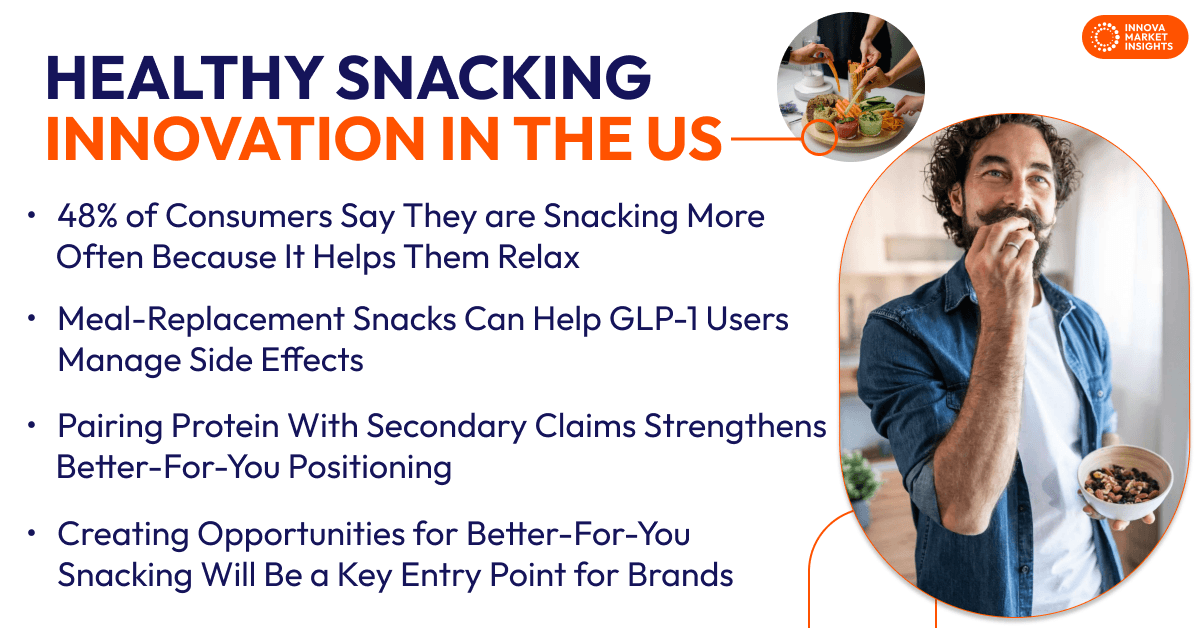
At the same time, 48% of consumers snacking more do so to help them relax, signaling how mental well-being and stress reduction are playing an increasingly important role in the category as benefits consumers are looking for. Tailoring options for mental wellness is therefore a key strategy for promoting healthy snacks in the US and Canada.
Why Are Costs Putting More Pressure on Snacking?
Rising prices are threatening all categories, but within this challenge, snacking has an opportunity. Instead of forcing consumers to cut back on snacking, brands should fight to keep prices low, while also creating further value for products by innovating health and wellness aspects. 25% of consumers are already trading meals for snacks, with Gen Z and Millennials snacking the most. Offering these consumers options that save money, maintain ease, and promote health can be a winning opportunity.
What Opportunities and Challenges Do GLP-1s Offer the Healthy Snacking Category?
The use of GLP-1 medications continues to grow, aided by greater awareness, visibility, and access. For GLP-1 users, smaller portions, nutrient density, extra protein, extra fiber, and hydration are growing needs. Consumers, as a whole, are already replacing meals with smaller bites. Therefore, guiding users of weight loss medications toward healthy snacks in Canada and US can help cement the category as worthy meal replacements that can also manage side effects. That being said, the limited amount of specific GLP-1 centered messaging compared to nutrition content claims indicates that emphasizing specific GLP-1 related nutrition themes can broaden the appeal of products.
How Does Reframing Snacks Have the Potential to Rewrite Occasions?
Snacking is not inherently bad, and brands that can help reframe snacking across habits and occasions can resonate with consumers. This means helping consumers find the portions, products, and combinations that best fit their needs. 48% of consumers say they are snacking more often because it helps them relax, and leading with this motivation, puts mental wellness at the center of snack messaging. Claims around energy and variety can help build relevance for moments throughout the day. Health concerns also have an impact on healthy snacking trends, highlighting the opportunity for brands to balance nutrition and indulgence for daily consumption. Brands that can turn salty snacks, confection, and bakery products into permissible treats will address these consumer preferences for health-conscious options. Smaller portions are another alternative, alongside snack pairings, such as fruit with a small portion of chocolate.
How Can Health Claims Do More Within Saturated Snack Subcategories?
Despite their health consciousness, only 13% of consumers look for health claims or nutrition claims on snacks, meaning that simple better-for-you claims will not cut it. Above all, flavor is the primary driver. Consumers also prioritize health and healthiness differently, with healthiness emerging on top. This means they do not rely on specific claims alone to assess the healthiness of a product and may even be skeptical of this type of marketing on packaging. Building trust is an important part for brands making claims about nutritional benefits. Gen Z and Millennials are more split on what is important when looking for a snack, indicating that claim stacking is a better route to engaging with this crowd.
High protein snacks are also important, but oversaturation in the healthy snacking market makes it increasingly challenging for product differentiation. Therefore, pairing protein claims with other claims further down the list of concerns can help better-for-you framing and meet multiple needs. Fiber is on a similar path, marking an important trend for brands to consider and get ahead of.
What’s Next for the Healthy Snacking Market?
For brands looking to the direction of the healthy snacking market, private label will continue to provide ground for innovation and increases in purchases. Although protein remains a key driver, products will fall flat, unless accompanied by additional complementary claims. Drinks as nutritious snacks, as well as snacking to replace meals are other trends. The latter, influenced by GLP-1 needs, can also contribute to convenience and enable easy snacking for on-the-go lifestyles.
This article is based on Innova’s Healthy Snacking in the US & Canada report. This report is available to purchase or with an Innova Reports subscription. Reach out to learn more.